Technical Resource Guide

    The Complete Roof Ventilation Guide

    Components, Materials, and Performance Metrics for North Carolina Homes

    Abstract

    This comprehensive analysis examines residential and commercial roof ventilation systems, encompassing passive and active technologies, material specifications, installation methodologies, and performance metrics. Drawing from manufacturer specifications, building science research, and field performance data, this guide serves as an authoritative reference for understanding ventilation system selection, implementation, and optimization in varying climate conditions.

    Fundamental Ventilation Science

    Ventilation Airflow Principles

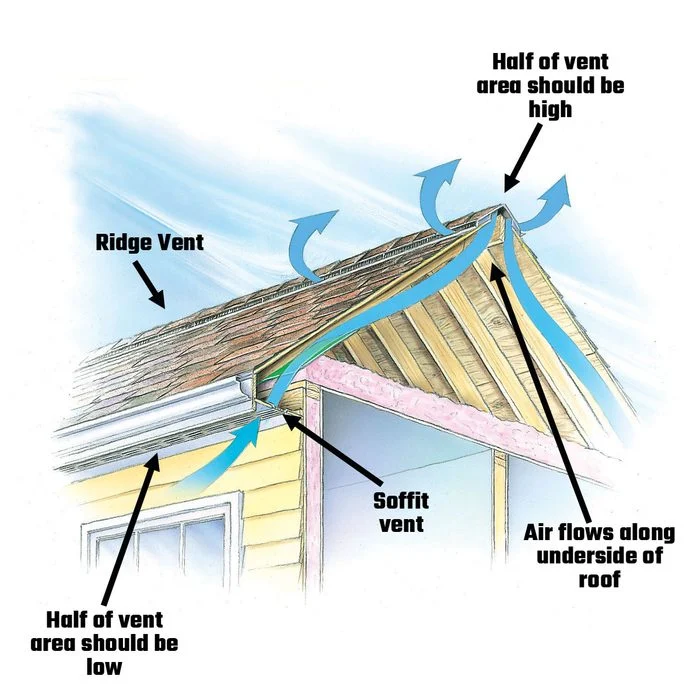
    Ridge Vents, Soffit Vents, and Natural Air Circulation

    Technical diagram showing proper roof ventilation airflow patterns with ridge vents and soffit vents

    Stack Effect

    Warm air rises naturally, creating pressure differentials that drive airflow through intake and exhaust vents.

    Wind Pressure

    External wind creates positive and negative pressure zones, enhancing natural ventilation effectiveness.

    Thermal Dynamics

    Temperature differentials between attic and outdoor air amplify ventilation airflow rates.

    The 300:1 Rule Explained

    IRC Section R806.2 specifies 1 ft² Net Free Area per 300 ft² attic space, but research indicates this minimum often proves insufficient for North Carolina's climate:

    Hot-Humid Zones

    1:250 recommended

    Coastal NC regions

    Mixed-Humid Zones

    1:300 acceptable

    Central NC regions

    Cold Zones

    1:150 with vapor barriers

    Mountain NC regions

    Types of Ventilation Systems

    Types of Ventilation Systems

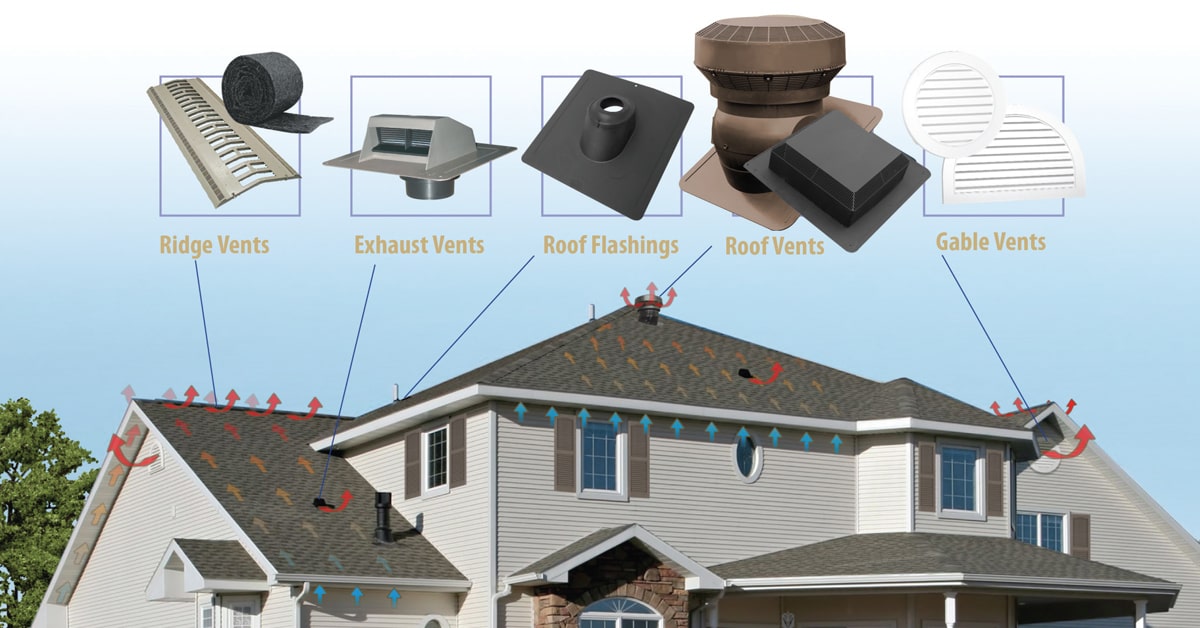
    Comprehensive Overview of All Vent Types

    Types of roof ventilation components including ridge vents, exhaust vents, roof flashings, roof vents, and gable vents with technical diagrams

    Passive Systems

    Ridge Vents

    Continuous exhaust along roof peak

    NFA: 10-18 sq in/linear foot

    Soffit Vents

    Intake vents under eaves

    NFA: 4-9 sq in/linear foot

    Static Vents

    Individual roof-mounted exhausts

    NFA: 50-144 sq in/unit

    Active Systems

    Powered Exhausts

    Electric or solar-powered fans

    CFM: 1,200-1,600/unit

    Turbine Vents

    Wind-driven rotating exhausts

    CFM: 300-500/unit

    Whole House Fans

    Large-capacity interior fans

    CFM: 4,000-7,000/unit

    Comprehensive Component Analysis

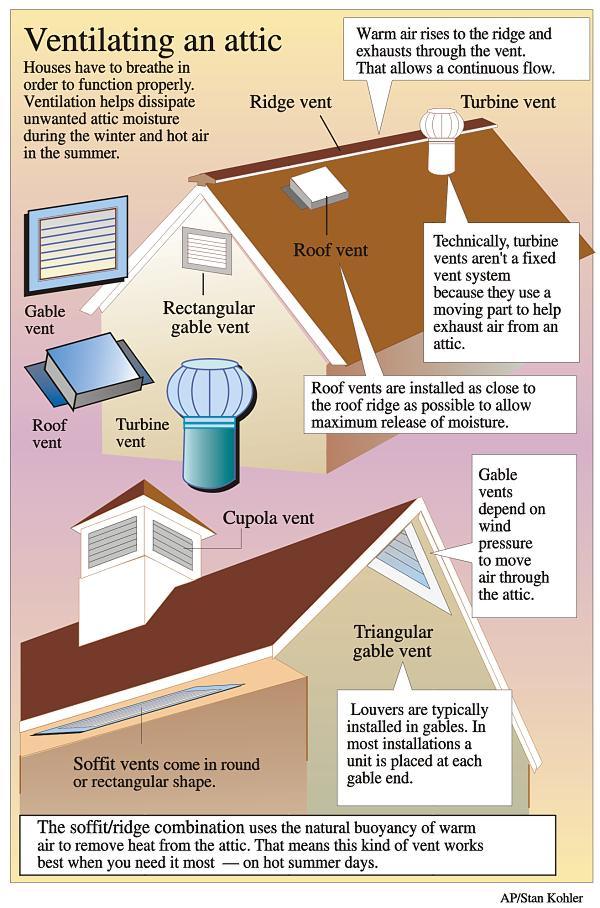
    Detailed Attic Ventilation Analysis

    Technical Specifications and Calculations

    Comprehensive attic ventilation technical diagram with detailed explanations of all components and airflow patterns

    ShingleVent II

    • NFA: 18 sq in/linear foot
    • Wind rating: 110 mph
    • Material: Copolymer
    • Cost: $3.50-4.50/linear foot
    • Installation: Cut 1.5" slot, nail every 12"
    • Warranty: 20 years

    RidgeMaster Plus

    • NFA: 12.5 sq in/linear foot
    • Wind rating: 130 mph
    • Material: Polypropylene
    • Cost: $2.75-3.75/linear foot
    • Installation: Cut 2" slot, nail pattern specific
    • Warranty: 15 years

    Cobra Rigid Vent 3

    • NFA: 10 sq in/linear foot
    • Wind rating: 180 mph (Miami-Dade)
    • Material: Rigid plastic
    • Cost: $4.00-5.00/linear foot
    • Installation: Hurricane-rated fastening
    • Warranty: 25 years

    Installation Best Practices

    Ridge Vent Requirements:
    • • Minimum 1.5" slot width
    • • 12" clearance from gable ends
    • • Proper shingle overlap
    • • Weather-resistant fasteners
    Performance Considerations:
    • • Wind uplift resistance
    • • Snow infiltration prevention
    • • Insect screening effectiveness
    • • Aesthetic integration

    Soffit Ventilation Components

    Continuous Soffit Vents

    Aluminum Strip Vents

    NFA: 6-9 sq in/linear foot

    Cost: $1.50-2.50/linear foot

    Installation: Cut soffit, secure with screws

    Vinyl Vented Panels

    NFA: 4-7 sq in/linear foot

    Cost: $8-12/panel (12 sq ft)

    Installation: Replace solid panels entirely

    Individual Soffit Vents

    Round Aluminum (2-4" diameter)

    NFA: 16-50 sq in/unit

    Cost: $2-4/unit

    Installation: Hole saw, caulk seal

    Rectangular Under-Eave

    NFA: 36-65 sq in/unit

    Cost: $4-8/unit

    Installation: Jigsaw cut, flange mount

    Ventilation Area Calculations

    Recommended Ventilation Areas

    Engineering Standards and Code Requirements

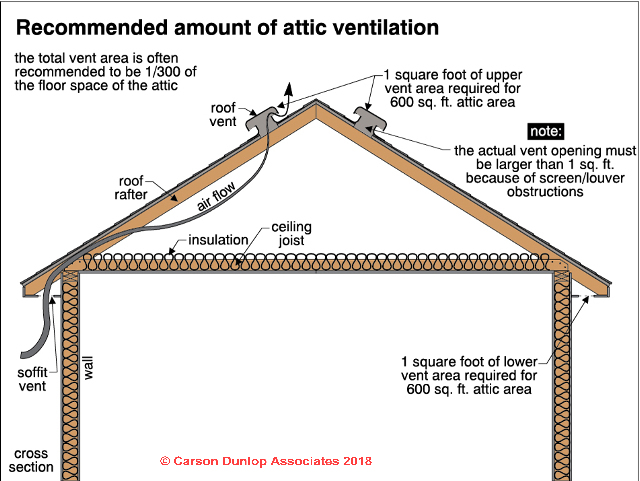
    Technical diagram showing recommended attic ventilation area calculations with upper and lower vent requirements

    Calculation Formula

    Basic Rule (IRC)

    Attic Area ÷ 300 = Total NFA Required

    Example: 1,500 sq ft ÷ 300 = 5 sq ft NFA

    Split Requirement

    50% intake (soffit) / 50% exhaust (ridge)

    Example: 2.5 sq ft soffit + 2.5 sq ft ridge

    Climate Adjustments

    Hot Climate Zones

    Increase by 20-30% (NC Coastal)

    1,500 sq ft = 6.5 sq ft NFA total

    Steep Roof Adjustment

    Add 10% for slopes over 8:12

    Enhanced stack effect requires more intake

    Performance Metrics and ROI Analysis

    Energy Savings

    Cooling Season Impact

    • • Attic temperature reduction: 20-40°F
    • • Ceiling heat flux reduction: 30-45%
    • • AC runtime reduction: 10-15%
    • • Dollar savings: $150-400/season
    • • Peak demand reduction: 15-25%

    Heating Season Benefits

    • • Moisture reduction: 15-25% RH
    • • Ice dam prevention value: $5,000-50,000
    • • Insulation performance: 100% R-value maintained
    • • Condensation elimination: 90% reduction

    Shingle Life Extension

    Temperature reduction impact on shingle life:

    10°F reduction
    20% life extension
    20°F reduction
    40% life extension
    30°F reduction
    60% life extension
    Economic Impact:

    Proper ventilation can extend a $15,000 roof replacement by 5-10 years, representing $3,000-6,000 in avoided costs.

    Installation Best Practices

    Ridge Vent Installation

    1. Slot width: 1.5" minimum, 2" maximum
    2. End termination: 12" from gable
    3. Shingle overlap: Per manufacturer
    4. Nail pattern: 1.5" from edges, 12" O.C.
    5. Sealant: Not recommended at joints
    6. Weather stripping: Install per code

    Soffit Vent Protection

    Insulation Baffles:

    • • Material: Polystyrene or cardboard
    • • Extension: 4" minimum above insulation
    • • Airspace: 1" minimum maintained
    • • Attachment: Staples or friction fit
    • • Coverage: Every rafter bay

    Power Vent Wiring

    Electrical Requirements:

    • • Dedicated 15-amp circuit recommended
    • • GFCI protection required
    • • Junction box: Accessible location
    • • Thermostat placement: Away from direct sun
    • • Solar options: Battery backup systems

    Professional Ventilation Services

    Carolina Trophy Roofs provides comprehensive ventilation services including thermal imaging diagnostics, airflow calculations, professional installation, and maintenance programs throughout North Carolina.

    Call for Consultation

    Speak with our ventilation experts

    Contact Us

    Get in touch with our roofing experts

    Contact Us Today

    Related Resources

    Learn how proper ventilation documentation supports insurance claims and prevents coverage denials.

    Understand how different roofing materials affect ventilation requirements and performance.

    Discover how proper ventilation maintains manufacturer warranties and extends material life.

    This technical guide represents current industry best practices as of 3/13/2026. Consult local codes and manufacturer specifications for project-specific requirements.