Roof Shingle Colors: A Real-World Guide
Every photo on this page is a roof our crews actually installed on an Eastern North Carolina home — not a manufacturer swatch.
Why Shingle Color Deserves More Thought Than It Usually Gets
A roof is the single largest visible surface on most homes — on a ranch or a story-and-a-half, it can dominate the view from the street. You will look at the color you pick every day for decades, and unlike paint, you cannot change it next spring on a whim. Yet most homeowners choose it in ten minutes from a small swatch card held under showroom lighting.
This guide is our attempt to do better. It is organized around the color families modern architectural shingles actually come in, illustrated with completed roofs from our own jobs around Eastern North Carolina, and focused on the decisions that genuinely trip people up: matching brick, handling our heat and humidity honestly, and keeping the HOA and the eventual resale buyer happy.
One vocabulary note before we start: nearly every shingle you see on this page is a blend, not a solid color. Architectural shingles mix several granule shades within each shingle, which gives the roof depth and hides small inconsistencies. When we name a family below, we mean the overall impression the blend gives from the curb.
The Five Shingle Color Families
Weathered Wood & Driftwood Neutrals
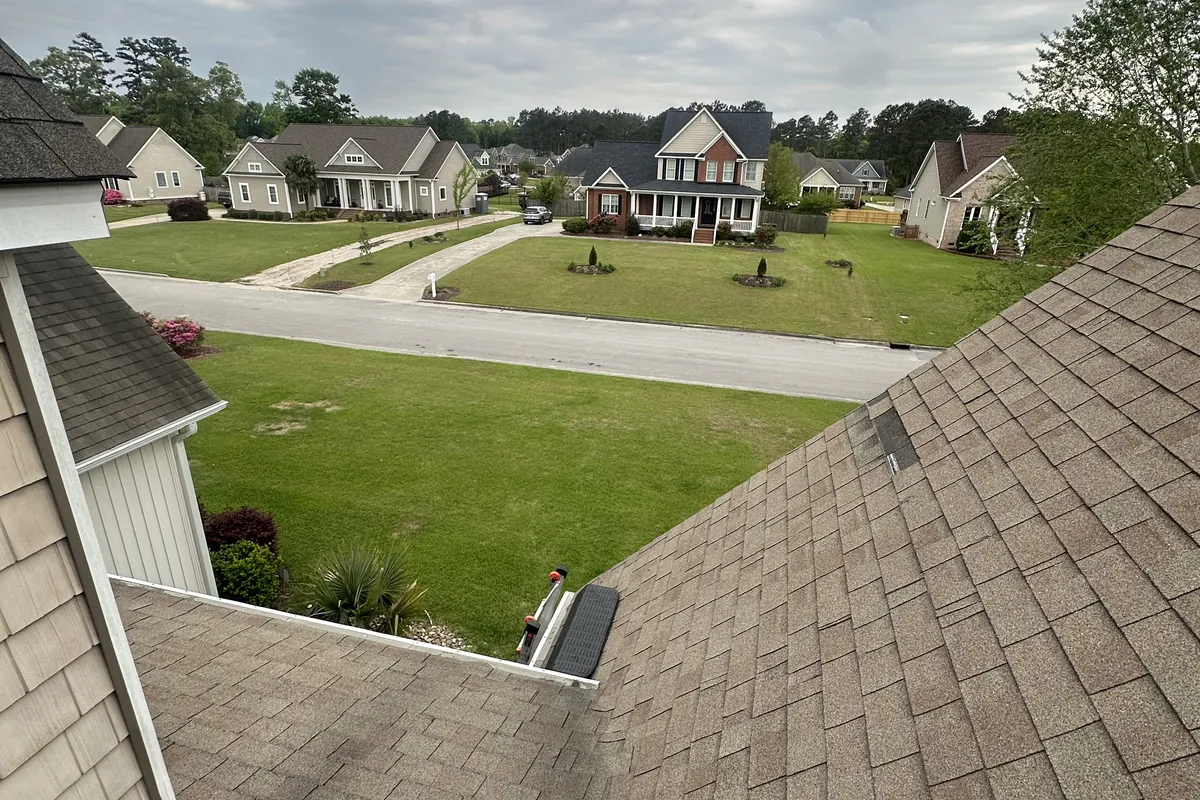
The perennial best-seller nationwide, and for good reason. Weathered wood blends mix tan, soft brown, and gray granules into a color that reads like aged cedar shakes. Driftwood variants lean slightly grayer and cooler.
Pairs with: nearly everything — tan and beige vinyl, cream or sage siding, natural stone, and most brick. It is the shingle equivalent of khaki. If your home has stone accents with warm veining, this family usually ties them together better than a gray can.
What it signals: settled, traditional, unfussy. It is the safest choice on this page, and the one we suggest first when a homeowner is torn or planning to sell within a few years.
Charcoal & Black
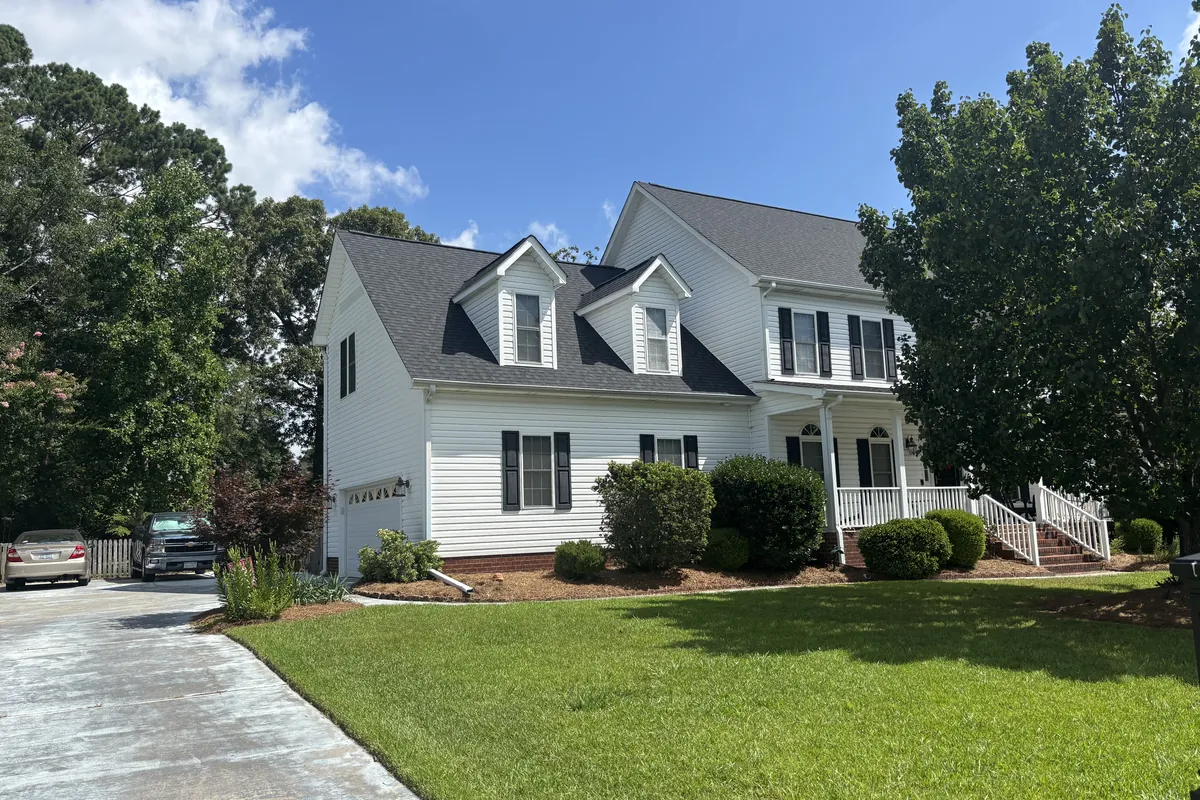
Charcoal and near-black blends are the sharpest-dressed option in the lineup, and they have surged with the popularity of modern farmhouse styling. True solid black exists, but most homeowners are happier with a charcoal blend that keeps some depth.
Pairs with: white and light-gray siding (the farmhouse pairing), red brick (a genuinely classic combination — more on brick below), and bold trim colors. On a small, low-slung house, a very dark roof can feel heavy; on a two-story with dormers it adds presence.
What it signals: crisp, current, deliberate. Bonus: dark blends are the most forgiving of the algae streaking our humid climate produces, since the staining tones into the shingle instead of standing out against it.
Brown & Autumnal
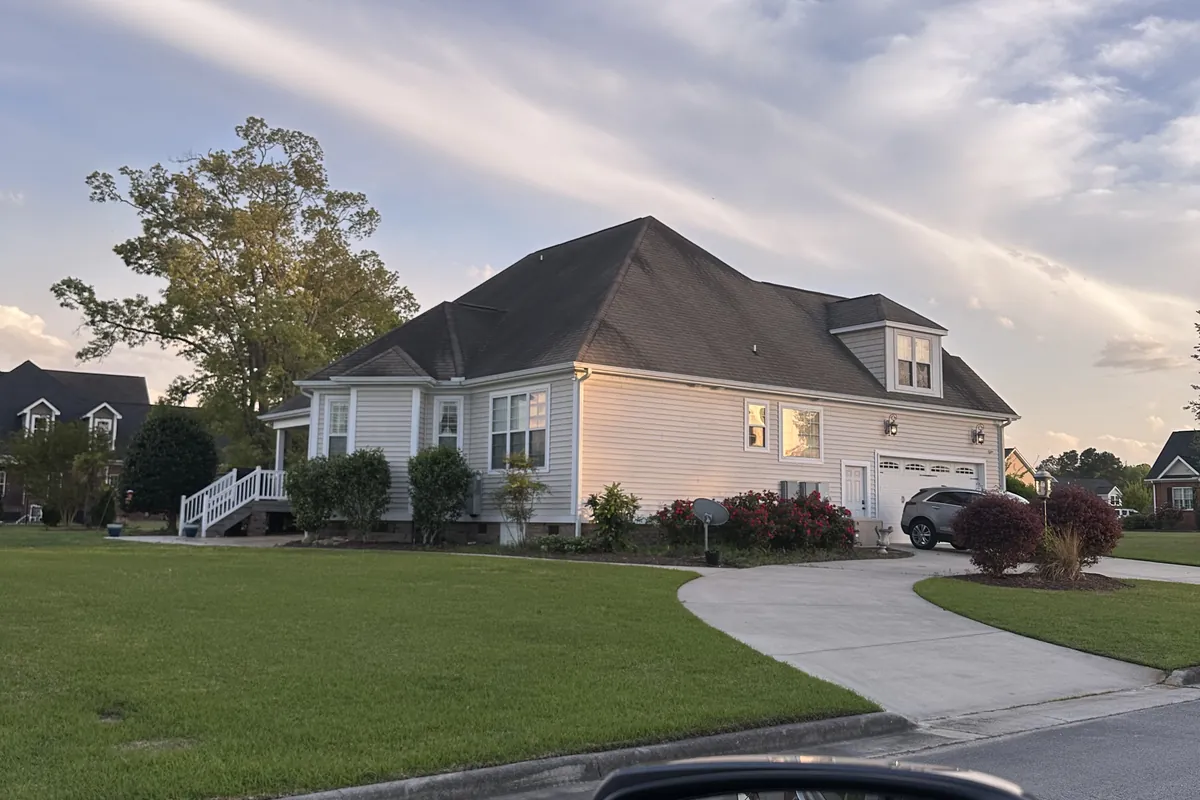
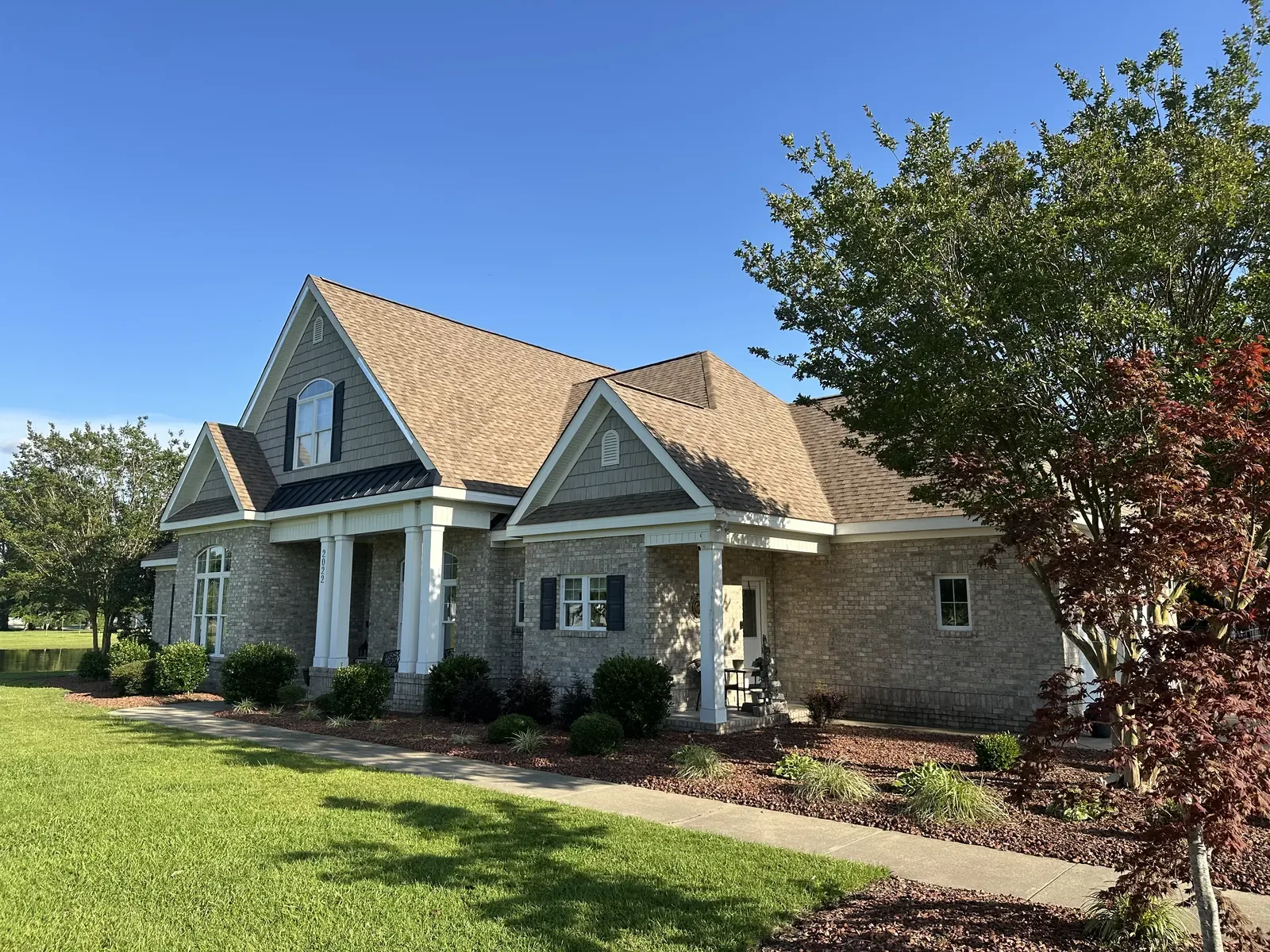
Browns run from soft chestnut through deep autumnal blends flecked with rust and amber. They photograph beautifully in golden-hour light and feel warmer and more organic than any gray.
Pairs with: cream, tan, and earth-toned siding; cedar accents; and brown-and-buff brick. Browns are the natural partner for homes with lots of wood detailing. Be cautious pairing strong red-flecked browns with strong red brick — two competing warm reds rarely settle.
What it signals: warm, established, rural-comfortable. Browns read especially well on ranches and farm properties with big lawns and mature trees — a large share of what we roof outside the city limits.
Gray & Slate
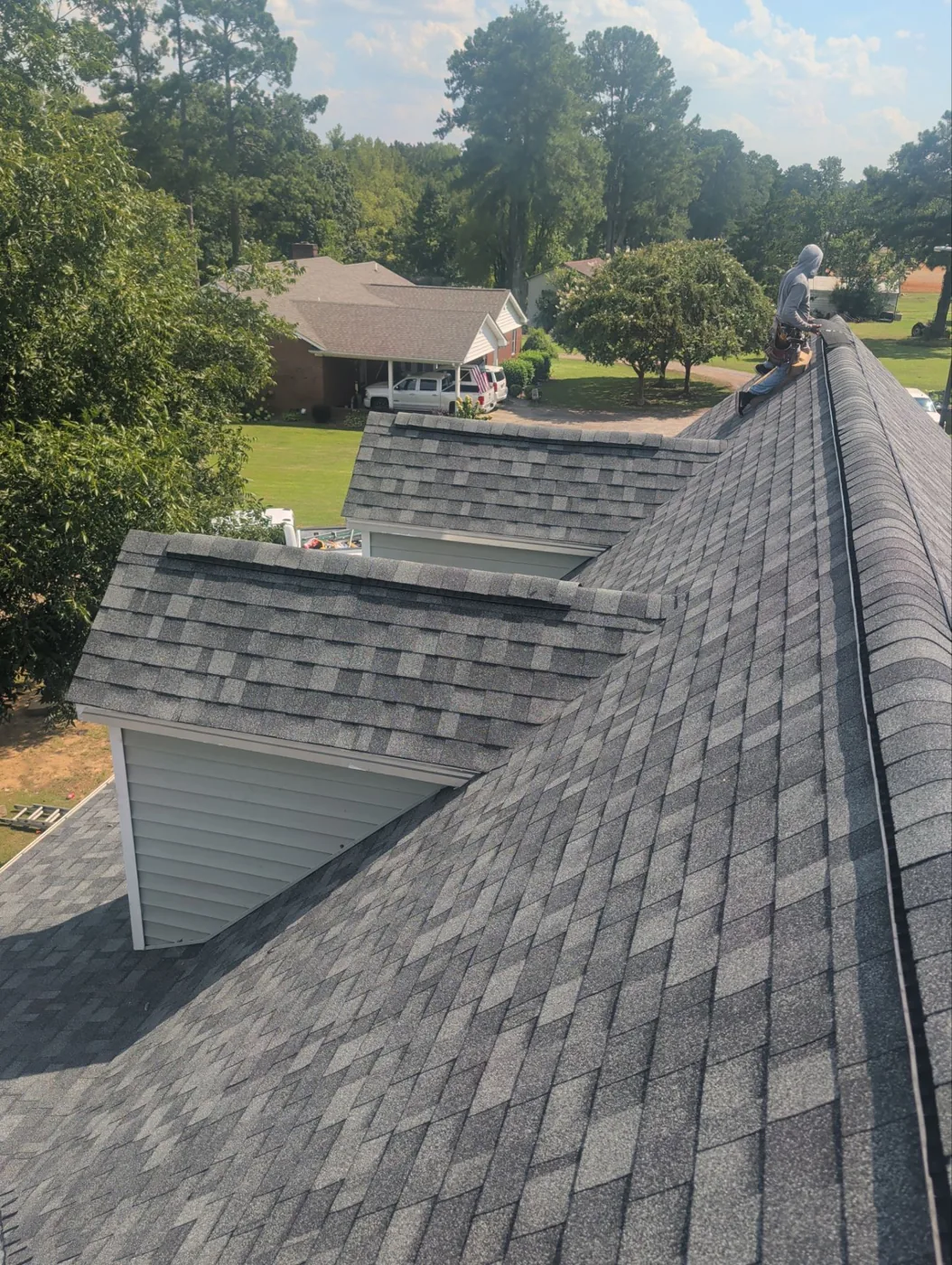
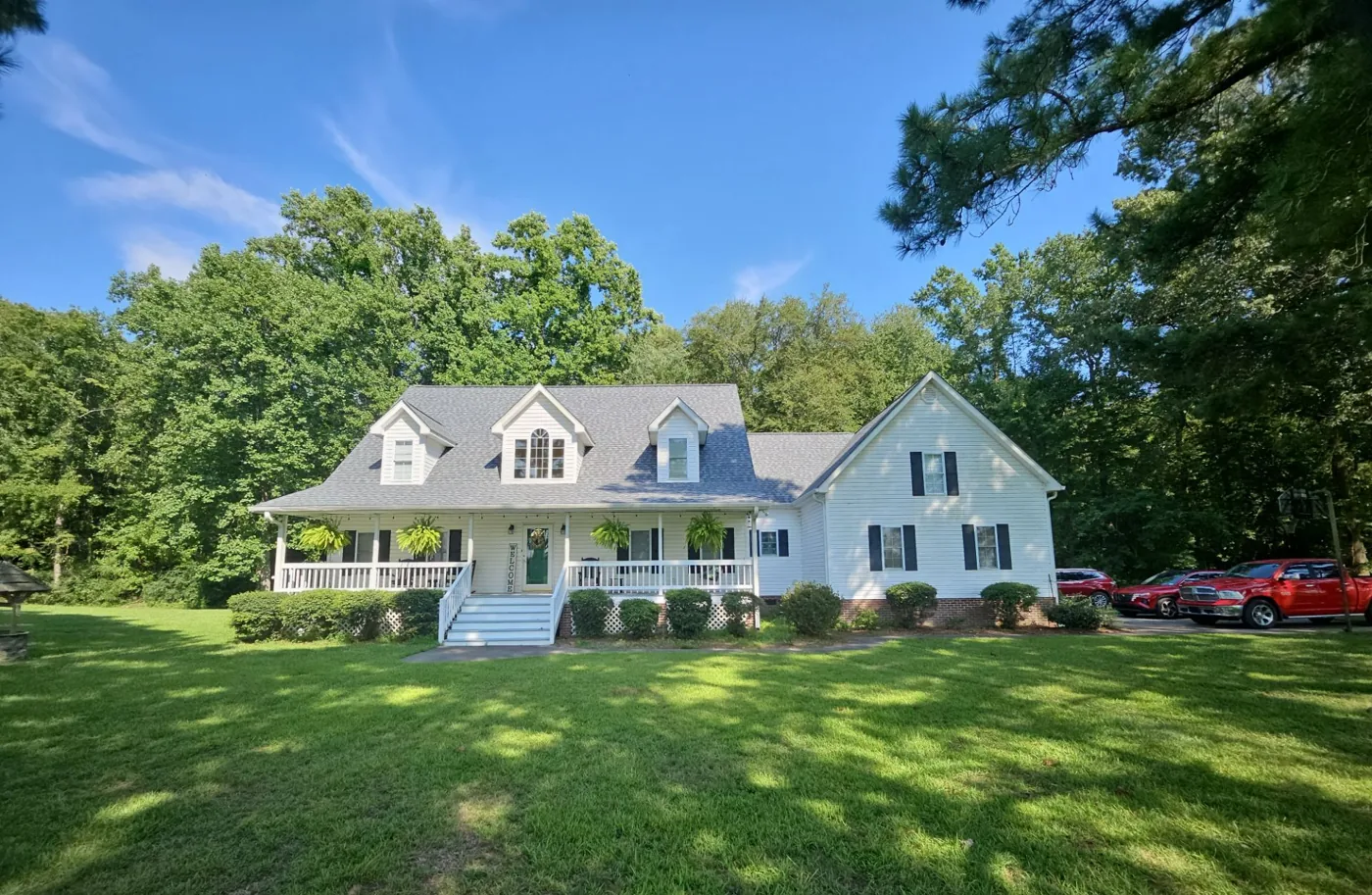
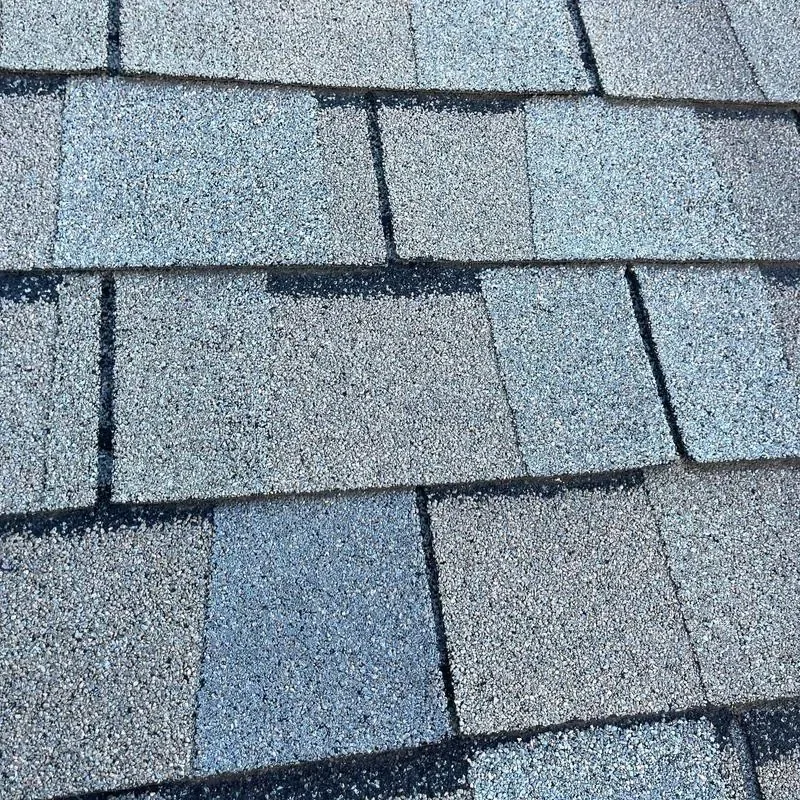
Grays are the workhorse family in Eastern North Carolina — we install more gray and charcoal roofs than everything else combined. They run from pale silver through pewter to slate blends with blue undertones that nod to natural slate roofs.
Pairs with: red brick (the region’s default good answer), white and colored siding alike, and painted trim of almost any color. Cool blue-grays suit coastal and waterfront homes; warmer pewter grays sit better against brick and stone.
What it signals: clean, neutral, quietly upscale. If weathered wood is khaki, gray is the navy blazer.
The Occasional Greens, Blues & Reds
Every major manufacturer offers a handful of true colors — hunter and forest greens, harbor blues, and terracotta or rustic reds. They are a small fraction of what gets installed, but on the right house nothing else will do.
Pairs with: greens flatter cream, tan, and log-style homes, especially on wooded lots where the roof echoes the canopy. Blues belong on coastal cottages with white or gray siding. Reds are a commitment — historically right on some farmhouses and Spanish-influenced designs, and occasionally requested for churches and commercial buildings.
What it signals: personality and a point of view. Just know that a strong color narrows your future buyer pool, and double-check the HOA section below before falling in love. If you want color with a safety net, several lines offer blends with green or blue undertones that read neutral from the street.
The Hard One: Matching Shingle Color to Brick
Eastern North Carolina is red-brick country — whole streets of brick ranches and colonials built across the last seventy years. Brick is also the one exterior you cannot repaint, so the roof has to come to the brick, never the other way around. This is the color question we get asked about more than any other, and the good news is there is a reliable method.
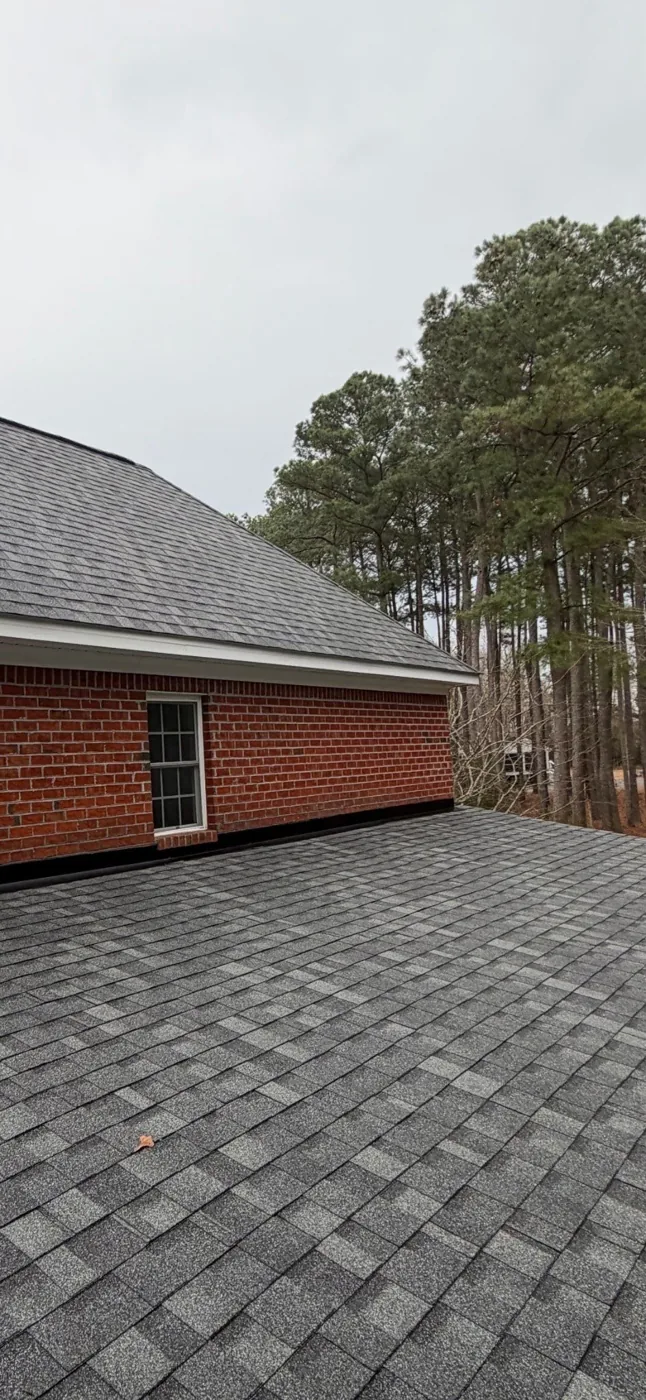
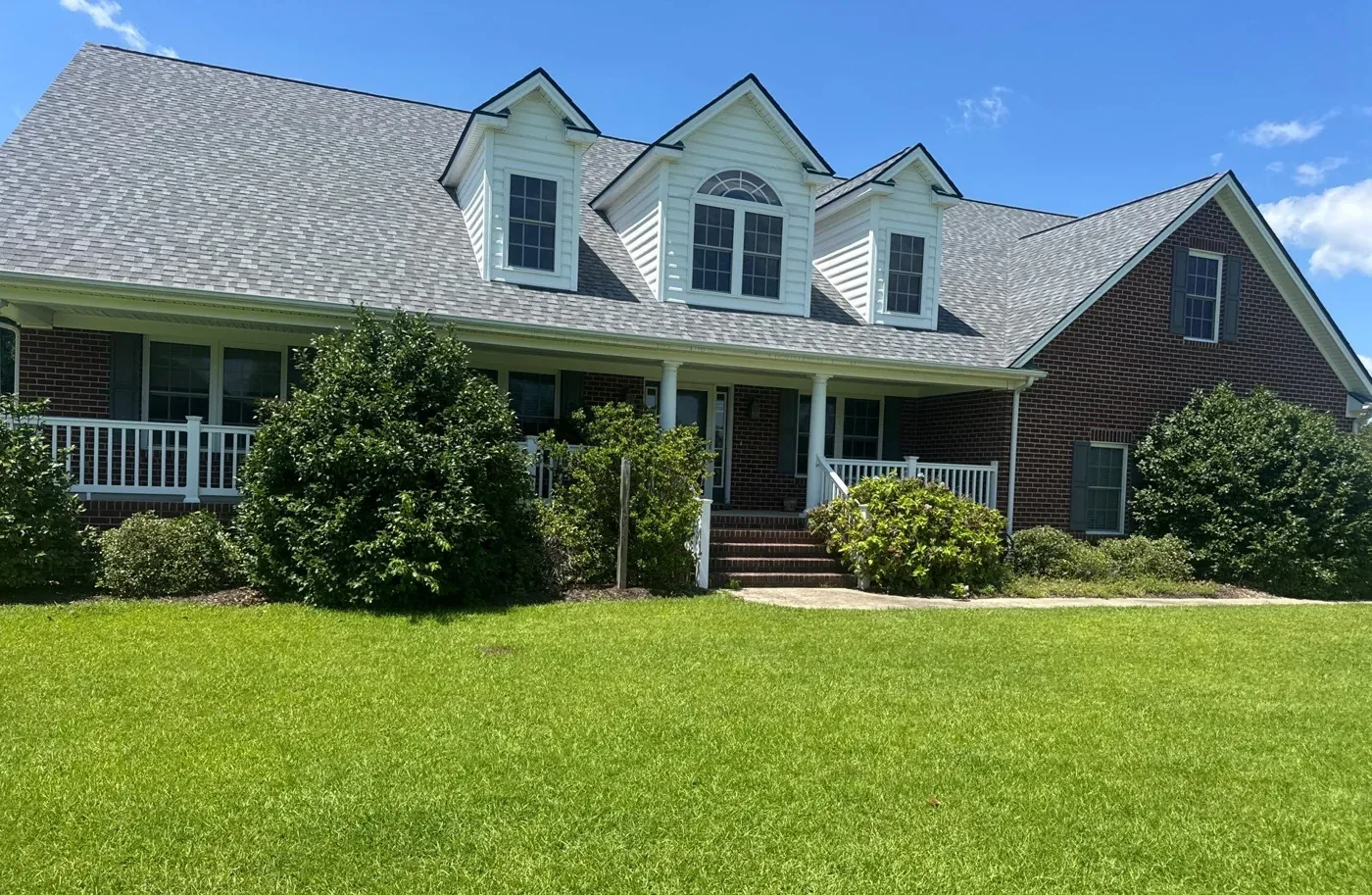
Pick from the undertones, not the brick face. Stand back and squint at your wall. Red brick is never just red — it carries flecks of charcoal, brown, buff, or plum, and it is bound together by mortar that is gray, cream, or white. Your shingle should echo one of those supporting colors. That is why gray, charcoal, and brown-gray blends succeed against red brick so consistently, and why a red-toned shingle on a red house almost always clashes: two different reds side by side magnify each other’s differences.
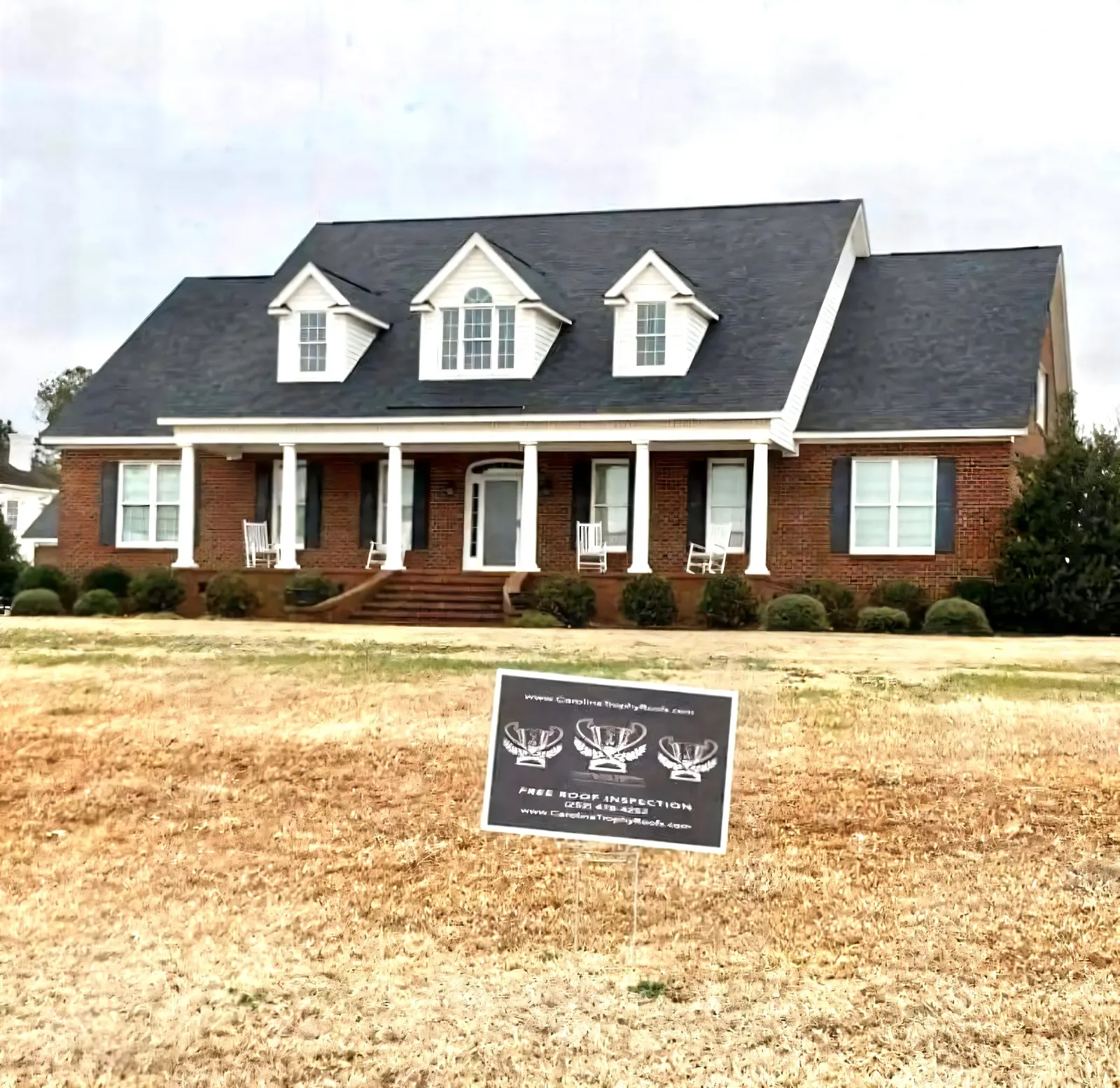
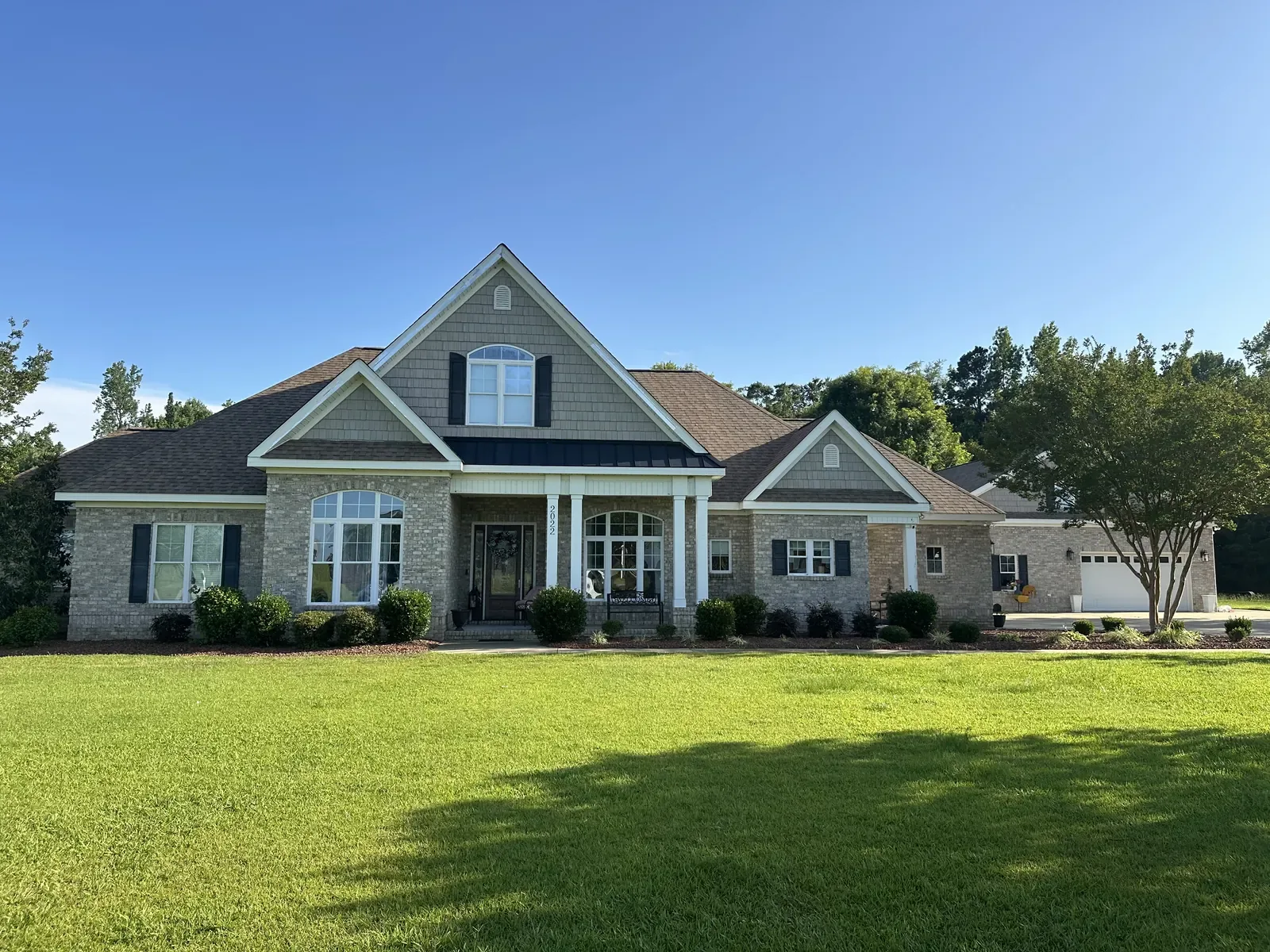
Then verify with sample boards on site. A two-inch swatch under showroom fluorescents tells you almost nothing about how a full slope will read against your particular brick in your particular light. We bring full-size boards, lean them against the wall, and look with you from the street — the only vantage point that matters.
Brown or buff brick flips the logic: its undertones are warm, so weathered wood, driftwood, and brown blends are the natural partners, with warm grays as the contrarian pick. Painted brick behaves like siding — the field is wide open.
Dark vs. Light Shingles in North Carolina Heat — Honestly
You will find pages all over the internet promising that a light roof will slash your cooling bill by some precise-sounding percentage. We will not do that, because in our experience the honest answer is more useful: yes, a dark shingle surface gets hotter in direct summer sun than a light one — you can feel the difference with your hand — but what determines how your house feels is mostly what happens under the deck, not on top of it.
An attic with proper intake at the soffits and exhaust at the ridge continuously flushes out the heat that any roof color collects. An attic without it cooks under a light roof too. Insulation depth on the attic floor then decides how much of that heat ever reaches your living space. Color is a real variable, but it is the third lever, not the first — so choose the color you want to live with, and let us make sure the ventilation math works. If you want the full picture, our roof ventilation guide covers intake, exhaust, and balance in detail.
One practical note for dark-roof lovers: shingle temperature swings are part of normal engineering across every color the manufacturers offer, and warranty coverage does not differ by color. Pick charcoal without guilt — just do not use it as a reason to skip the ridge vent.
Algae Streaking: The Eastern NC Factor Nobody Mentions at the Showroom
Drive any neighborhood from Rocky Mount to the coast and you will see them: long dark streaks running down otherwise sound roofs. That is airborne algae, and our warm, humid air is ideal for it. It feeds on the limestone filler in shingles, spreads from roof to roof, and shows up worst on the north-facing slopes that stay damp longest.
Color choice interacts with algae in two ways. First, visibility: streaks that disappear into a charcoal blend will be glaring on a pale silver roof. If you love light colors, that matters. Second — and more important — modern algae-resistant shingles embed copper-bearing granules that release trace amounts of copper when it rains, suppressing growth across the roof surface for years. Every major manufacturer we install offers algae-resistant versions of their popular architectural lines, many with algae-specific warranty coverage.
Our advice for this region is simple: whatever color family you choose, choose it in an algae-resistant line. The difference in how the roof looks in year eight is the whole argument.
The Same Shingle Is Three Different Colors in Three Different Lights
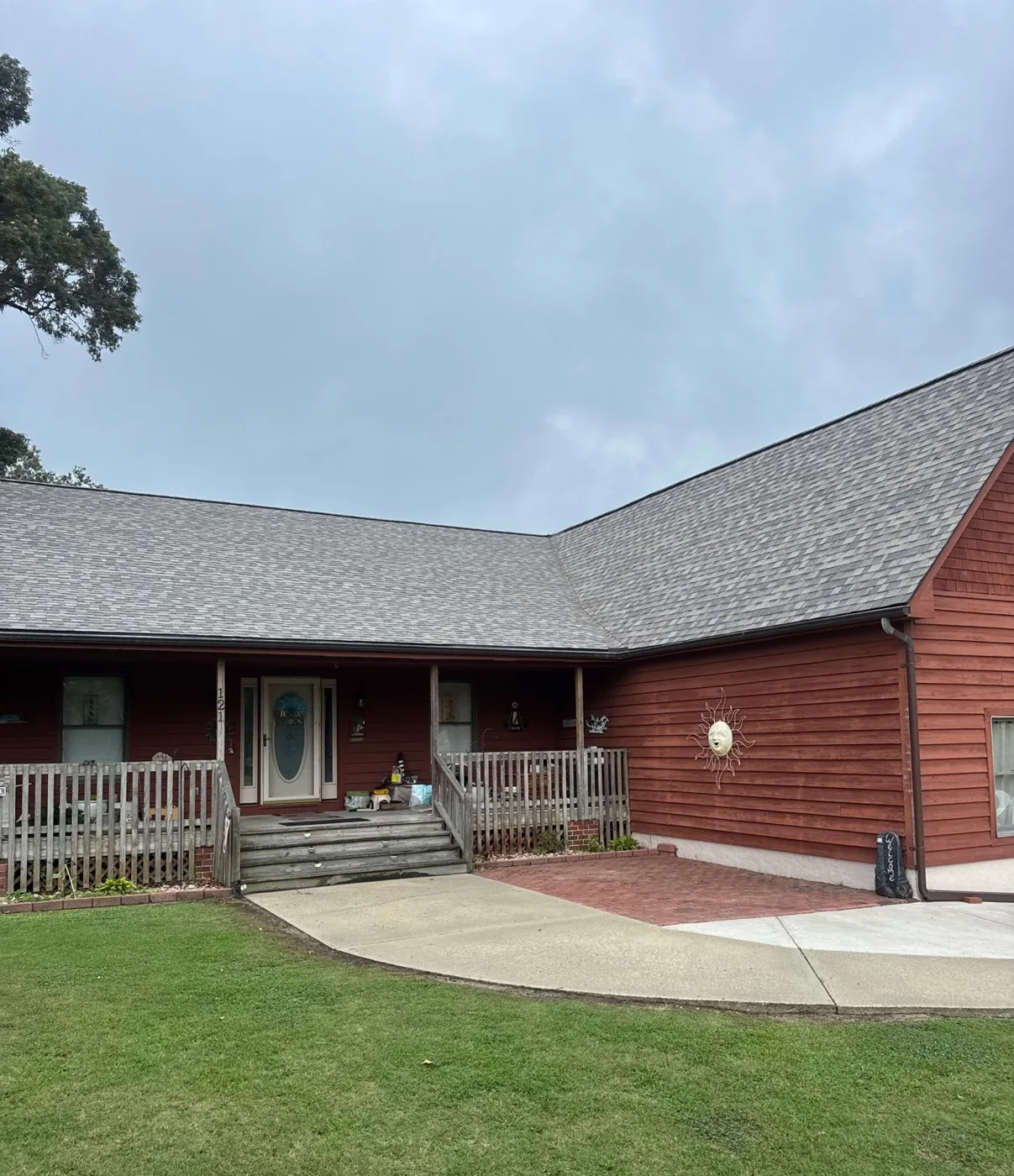
Granule blends shift more with light than any paint chip. Full sun lightens a roof and brings out its warm flecks; overcast skies flatten and cool it; low morning and evening sun exaggerates warm tones, as the dusk photo in the brown section shows. A blend that looks perfect at 9 a.m. on the east slope can feel entirely different on the same slope at 4 p.m.
So treat sample viewing like the small investment it is: boards outdoors against the house, checked once in the morning and once in the afternoon, and never a final decision under showroom lighting or from a phone screen. We will happily leave boards with you for a day or two — a roof is a twenty-five-year decision and deserves twenty-four hours of looking.
HOA Fit, the Neighborhood, and the Eventual Buyer
Check your covenants before you fall in love. Many Eastern North Carolina subdivisions require architectural review approval for roof color, and some keep an approved list by manufacturer and product name. Submittals are routine for us — we provide the manufacturer, line, and color documentation your board wants — but the time to discover the rule is before ordering, not after.
Even without an HOA, look down your street the way we photographed from that driftwood ridge above. A roof that sits within the neighborhood’s range — grays, browns, weathered neutrals — reads as belonging. That does not mean matching your neighbor shingle-for-shingle; it means choosing your note within the same key.
On resale: a new roof is a genuine selling point, and a neutral one is a selling point with no asterisk. Weathered wood, gray, and charcoal let every buyer picture their own front door color. A strong green or blue may be exactly right for you — just make that choice knowing it is a choice about the buyer pool too. If you plan to sell within a few years, stay neutral and spend your personality budget on the front door.
The Color Ranges We Install
We install architectural shingles from the major manufacturers — GAF, Owens Corning, and CertainTeed among them — and their popular architectural lines each carry deep color decks spanning every family on this page, most with algae-resistant options. Which line fits your project usually comes down to the warranty structure and the specific blend that wins the sample-board test at your house. You can read about the manufacturers we work with on our brands page.
Shingle Color Questions We Hear Every Week
What is the most popular roof shingle color?
Neutral blends dominate. Weathered wood and driftwood tones, mid-range grays, and charcoal are the colors we install most often in Eastern North Carolina, because they pair well with almost any brick or siding and stay easy to live with for the life of the roof. Solid single-tone colors are far less common than blends, which mix several granule shades in each shingle.
Do dark shingles make my house cost more to cool?
A dark roof surface does run warmer in direct sun than a light one, but in practice your attic ventilation and insulation matter far more to comfort and cooling than shingle color does. A dark roof over a well-vented, well-insulated attic performs fine in North Carolina heat, while a light roof over a starved attic still bakes. If summer heat is your concern, have the ventilation checked before you let it decide your color.
How do I match a shingle color to red brick?
Pick from the undertones, not the brick face itself. Look at the mortar color and the darkest and lightest flecks within the brick, then choose a shingle blend that echoes one of them — usually a gray, charcoal, or brown-gray blend. Avoid shingles with red or orange tones that compete with the brick. Always stand full sample boards against the actual wall outdoors before deciding.
Can I see shingle samples before I decide?
Yes. We bring full-size sample boards to your home so you can view them against your brick or siding, outdoors, in the light your roof will actually live in. You can also try colors on a photo of a similar home first with our online roof designer at carolinatrophyroofs.com/design-your-roof.
What causes the black streaks on roofs around Eastern NC, and does color hide them?
Those streaks are algae, which thrives in our humid climate. Darker shingles conceal the staining better than light ones, but color only hides the symptom. Algae-resistant shingles with copper-bearing granules address the cause, and the major manufacturers we install all offer them. If your current roof streaks badly, ask about algae-resistant lines when you replace it.
Do I need HOA approval for my shingle color?
In many Eastern North Carolina neighborhoods, yes. HOAs and architectural review boards often maintain an approved shingle list or require a submittal with the manufacturer name, product line, and color. We handle that paperwork routinely — bring us your covenants and we will confirm the color you want is approvable before anything is ordered.
See Your Colors Before You Commit
The fastest way to narrow the field is our online visual designer — pick a home style, try shingle colors on it, and get a feel for the families before a single sample board arrives. When you are ready for the real thing, we bring boards to your home anywhere in our Eastern North Carolina service area and look at them with you, on site, in your light.