Commercial roof coating & restoration
Restoration systems for low-slope commercial roofs — single-ply, modified bitumen, built-up and spray foam — specified after a moisture survey and adhesion testing, and phased around the business under the roof.
Commercial & ResidentialEastern North Carolina
A roof coating is a fluid-applied membrane installed over a roof you already own — a way to put a sound but weathered roof back into service without tearing it off. Done right, on the right roof, it is some of the best money a building owner can spend. Done wrong, or on the wrong roof, it is an expensive way to hide a problem. This page explains the difference the way we would explain it standing on your roof.
Carolina Trophy Roofs installs coating and restoration systems on commercial and residential roofs across Eastern North Carolina — Rocky Mount, Wilson, Greenville, Tarboro and the surrounding counties. We apply Ames coating systems, with manufacturer-trained application over metal, membrane and modified-bitumen roofs.
A roof wears out from the surface down. On a metal roof it is the finish that chalks and the fastener washers that dry out long before the panels lose their strength. On a flat roof it is the membrane surface that the sun cooks while the insulation and deck underneath are still doing their jobs. A coating system takes advantage of that: it renews the sacrificial layer — the part the weather actually attacks — and keeps everything below it in service.
That is why restoration compares so favorably to replacement when the roof qualifies. There is no tear-off, so nothing goes to the landfill and the building is never opened to the sky mid-project. The business under the roof keeps operating — no vacated floors, no closed loading docks, none of the schedule risk that comes with stripping a roof in a part of the country where an afternoon thunderstorm is a standing possibility five months of the year. And because the finished surface is typically a reflective white, the roof runs cooler under the summer sun than the dark, weathered surface it replaced.
The qualifier matters as much as the promise: a coating renews a roof that is fundamentally sound. It does not repair structure, dry out saturated insulation, or rescue a roof at the end of its life — and a contractor who coats one of those roofs anyway has not saved the owner money, just postponed the invoice and buried the evidence. We turn down that work, and further down this page we spell out exactly when we will tell you a coating is the wrong call. For roofs past that line, our commercial roofing page covers the replacement side of the conversation.
Every job below starts the same way — with an inspection that decides whether the roof qualifies — and ends the same way, with a walk of the finished roof and the paperwork for it. What happens in between depends on the roof.
Restoration systems for low-slope commercial roofs — single-ply, modified bitumen, built-up and spray foam — specified after a moisture survey and adhesion testing, and phased around the business under the roof.
Rust treatment and primer, individually sealed fasteners, taped and fabric-reinforced lap seams, then base and top coats. For shops, warehouses, farm buildings, churches and homes with sound panels and a tired finish.
Seamless coating over flat and nearly flat roofs, with the system matched to the substrate and the roof made sound first.
Metal roofs on homes and outbuildings, manufactured and mobile home roofs, and the low-slope roofs over porches, carports and additions that cause an outsized share of household leaks.
Repairs to damaged or worn coating, and cleaning and recoating a coated roof at the end of its service life — the renewable part of the economics that makes a coating worth it.
The inspection that decides everything else: which sections qualify for coating, which need repair or replacement first, and what the specification should say. Straight answers, including no.
Our coating systems come from Ames Research Laboratories, a manufacturer of rubberized elastomeric roof coatings, and our crews are manufacturer-trained on them. A typical Ames system is built in layers: a liquid-rubber base coat such as Ames Blue Max, which bonds to weathered metal, asphalt and other substrates and bridges seams; Ames seam tape and polyester reinforcing fabric at laps, fasteners and penetrations; and a bright white elastomeric top coat such as Ames Maximum-Stretch that reflects the sun off the roof.
Working in one manufacturer’s system matters more than it sounds. The base coat, the detail materials and the top coat are designed to bond to each other, the manufacturer’s data sheets set the coverage rates and weather limits we apply to, and there is one party answerable for how the system performs. When a roof’s substrate calls for a different chemistry — the adhesion questions below — we tell you so in the specification, by name.
One word to clear up first, because it appears on almost every coating bid you will ever collect: elastomeric. It is not a product. It describes a property — a cured film that stretches and recovers as the roof expands and contracts — and silicones, acrylics and urethanes all qualify. A bid that names only “elastomeric coating” has told you how the film behaves and nothing about the chemistry, and the chemistry is where coating jobs are won and lost. Here is how we choose.
A high-solids, moisture-cure coating that stays flexible once it cures.
Where it belongs: Aged single-ply membranes, weathered metal and spray foam.
The honest part: The trade-offs are real: cured silicone holds dirt, it is slick underfoot when wet, and once it is down, only more silicone will stick to it. Every future recoat on that roof is a silicone recoat. We tell owners that before the first gallon is opened, not after.
A water-based coating that goes on easily, holds its color, and handles UV well for the money.
Where it belongs: Metal roofs and low-slope roofs. A quality acrylic system is the cost-effective choice, and it recoats easily for as long as you own the building.
The honest part: It cures by evaporation, so the weather window during application matters more than it does with silicone — temperature, dew point and incoming rain all decide whether it is a coating day.
The traditional maintenance coating for asphalt-based roofs: an asphalt-cutback coating loaded with aluminum flake that leafs to the surface and throws sunlight back off the roof.
Where it belongs: Smooth-surfaced modified bitumen and smooth built-up roofs. Asphalt ages by cooking in the sun; an aluminum coating is the classic, proven way to slow that clock on a mod-bit roof that is otherwise in good order.
The honest part: It is a maintenance coat, not a restoration membrane. It buys years on a sound asphalt roof; it does not turn a tired one into a new one. When a mod-bit roof needs more than that, we talk about a full silicone or acrylic restoration system — or replacement.
The toughest film of the group — high tensile strength and real abrasion resistance. Urethanes are commonly used as a base coat over spray foam and in areas that get walked on.
Where it belongs: Roof sections with regular foot traffic around HVAC equipment, spray-foam roofs, and as a reinforcing base layer under other topcoats where impact and wear are the concern.
The honest part: Rarely the whole answer by itself on a big roof, mostly because of cost and workability. We typically use urethane where its toughness earns its keep and pair it with silicone or acrylic across the open field.
The chemistry is half the specification. The other half is the roof it is going onto, because every substrate has its own failure points and its own preparation demands — and a coating quote that does not mention your substrate by name was written before anyone thought hard about your roof.
The most common coating candidate in our part of the state — screw-down panels on shops, warehouses, farm buildings and older homes. The system stands or falls on what happens before the field coat: rust has to be mechanically prepped and primed with a rust-inhibitive primer, every fastener head gets individually sealed, and the horizontal lap seams get brush-grade sealant or seam tape. Skip that detailing and the coating is a paint job; do it right and a structurally sound metal roof goes back into service for another long stretch of its life.
Aged single-ply can absolutely be restored, but adhesion is the whole game. Weathered TPO is a notoriously difficult surface to bond to, and black EPDM bleeds carbon that will ghost through the wrong coating. Both call for the manufacturer’s specified cleaner and primer, and we run adhesion test patches on the actual roof before quoting a system — because the only opinion that matters about whether a coating will stick to your membrane is your membrane’s.
Granule-surfaced mod-bit drinks coating — the granules dramatically increase the surface area, so honest coverage rates are far higher than on a smooth roof, and a bid that prices mod-bit like smooth metal is a bid that will be applied too thin. Smooth mod-bit takes aluminum coatings well; granulated surfaces generally want a heavier-bodied acrylic or silicone build.
Smooth-surfaced BUR is a reasonable coating candidate with the same logic as mod-bit. Gravel-surfaced BUR usually is not — the gravel has to come off or be dealt with before any thin-film system means anything, and by the time that work is priced honestly, the conversation is often really about replacement. We will tell you which conversation you are in.
Foam roofs are not a coating candidate so much as a coating dependency — SPF degrades quickly in direct UV and is designed from day one to live under a maintained coating. If you have a foam roof, recoating on schedule is not an upgrade, it is the maintenance plan. Letting the coating wear through to the foam is how a good foam roof becomes a tear-off.
Coating specifications are written for the country in general. Roofs age according to where they actually are, and this region works on them from three directions at once.
The sun, for most of the year. A long, hot cooling season means months of UV working on membrane surfaces and baked-on heat cycling metal panels through expansion and contraction every single day. UV is what ages asphalt and single-ply from the top down, and thermal cycling is what backs out fasteners and works seams open on metal. Both are exactly the stresses a reflective, flexible coating exists to absorb.
Rain that arrives sideways. Summer thunderstorms and tropical systems drive rain horizontally into lap seams, fastener heads and flashings — entry points a roof sheds easily when water merely falls on it. That is why our detailing stage treats every seam and fastener individually before the field coat: the field of a roof almost never leaks here. The details do.
Salt, toward the coast. The closer a building sits to the sounds and the sea, the faster bare and scratched metal corrodes. For coastal-side metal roofs, a coating system with genuine rust treatment underneath it is one of the most cost-effective defenses there is — and rust prep is the part of the job where the coastal work gets won or lost.
Every coating failure we get called to look at traces back to a shortcut in one of the first four steps — the ones that are invisible in the finished photos. So here is the whole sequence, including the parts a low bid quietly leaves out.
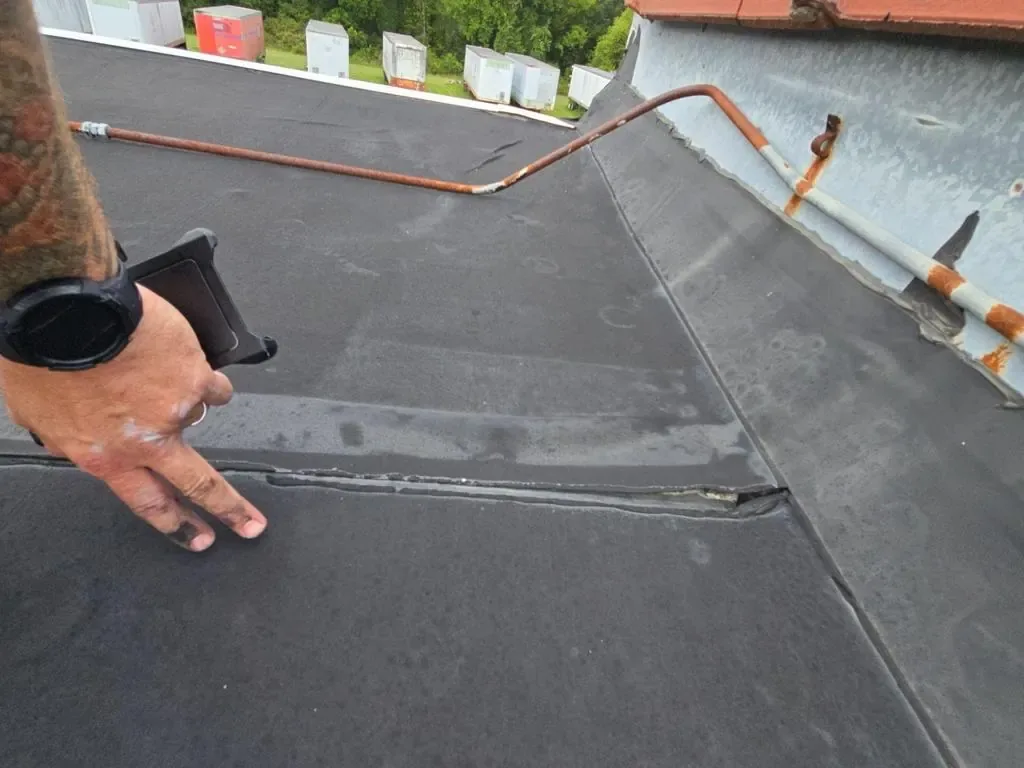
Before anyone talks systems, we find out what is under the surface. That means walking the roof, checking seams, fasteners, flashings and drains — and critically, checking for moisture trapped in the assembly, with core cuts where the roof’s history makes them warranted. Wet insulation sealed under a new coating does not dry out; it stays in the roof and keeps working on the deck. Finding it first is the entire point of the survey, and it is the step most bad coating jobs skipped.
Coatings do not fail in the bucket; they fail at the bond line. The roof gets pressure-washed with the cleaner the coating manufacturer specifies, rinsed, and allowed to dry. On questionable substrates we set adhesion test patches and come back to pull on them before committing to the system. A day of proper cleaning is worth more to the life of the coating than an extra bucket of material ever will be.
Coating over active rust seals the rust in with everything it needs to keep going. Rusted areas get mechanically prepped — wire wheel or abrasive, down to sound metal — then primed with a rust-inhibitive primer made for the job. On coastal-side buildings where salt air has been chewing on panels for decades, this step is most of the labor, and it is the difference between a restoration and a repaint.
This is the step that actually stops leaks, and it happens before the field coat, not instead of it. Every seam and lap gets brush-grade sealant, reinforced with polyester fabric where movement calls for it. Every fastener head gets individually buttered. Pipes, curbs, drains and transitions get flashed with the system’s detail materials. The field coat gets all the attention in the photos; the detail work is what does the work.
The field coats go on at the manufacturer’s specified coverage rate, inside the weather window the chemistry demands — temperature, dew point and incoming rain all matter, and in an Eastern NC summer the radar gets checked more often than the phone. A coating’s spec is really a film-thickness spec, measured in mils, and a system applied thin looks identical to a system applied right for the first year or two. We check wet film thickness with a gauge as we go, because that is the only honest time to check it.
When the system is down and cured, we walk it with you — details, terminations, thickness, housekeeping. You get photographs of the stages that are now invisible, the manufacturer’s warranty registration where the system carries one, and a straight answer about maintenance: what to look at each year, and when a maintenance recoat will eventually make sense. A coated roof you never look at again is a coated roof on the old schedule.
Why film thickness is the number that matters: a coating specification is, at bottom, a promise about how many mils — thousandths of an inch — of cured material end up on the roof. The manufacturer’s published warranty and service expectations are tied to that thickness, and every gallon “stretched” past its coverage rate is thickness that quietly never arrives. It is the easiest thing in this trade to cheat and the only thing we can prove as we go, which is why the wet-film gauge rides in the same pocket as the phone on our application days.
This section is on the page because it is the conversation we actually have on roofs, and because a coating company that never says no is not evaluating your roof — it is evaluating your budget. There are three situations where we will tell you not to coat.
If the moisture survey finds insulation holding water across meaningful areas of the roof, a coating seals that water into the assembly. The insulation never dries, the deck corrodes or rots from below, and the shiny new surface hides all of it until the damage is structural. Wet areas have to be cut out and replaced first — and if too much of the roof is wet, coating stops making sense at all.
Coatings are membranes, not structure. Rusted-through metal panels, rotted sheathing, soft spots underfoot — a fluid-applied product bridges none of that. A roof at the end of its structural life needs a roof, and we would rather lose a coating job than sell one that buries a problem for the next owner to find.
You will find contractors happy to spray a shingle roof with something and call it restoration. We are not among them. An asphalt shingle roof sheds water by design and ages by losing granules; a coating changes neither fact in your favor, and shingle manufacturers do not bless it. When a shingle roof is tired, it needs repair or replacement — and we will tell you which.
None of these verdicts are guesses — they are what the inspection and moisture survey are for. If your roof lands on the replacement side of the line, we will show you the evidence on the roof, not just assert it, and the conversation moves to what a replacement or a phased plan looks like. Either way you leave knowing what your roof actually needs.
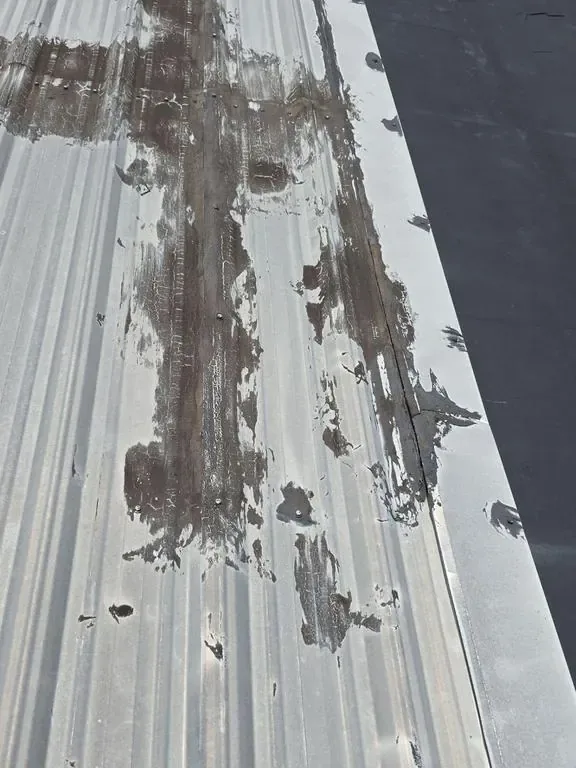
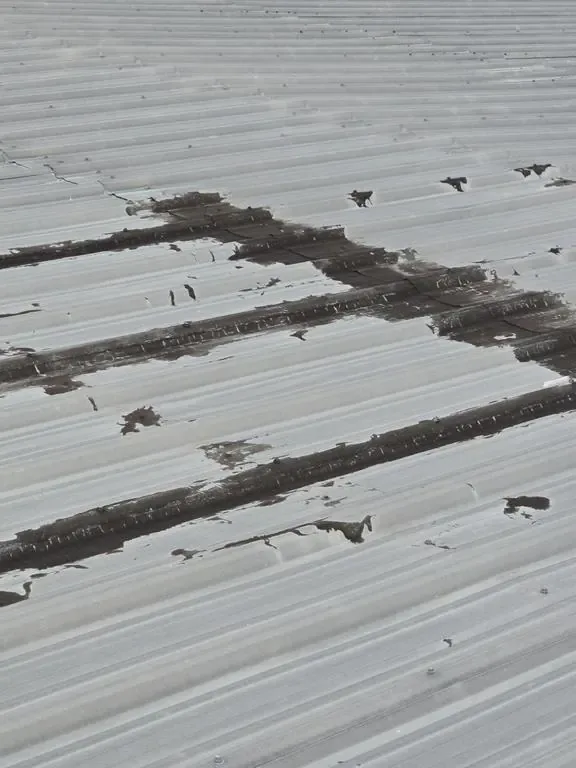
These photographs are from a Carolina Trophy Roofs steeple restoration in Eastern North Carolina — specifically the flat deck at the steeple’s base, which had been quietly funneling water down the brick for years. It is a small deck, but it went through exactly the sequence described above, in order: find the corrosion, treat and seal it, then recoat the field to a single continuous surface. The same logic scales from this deck to a warehouse roof; only the square footage changes.
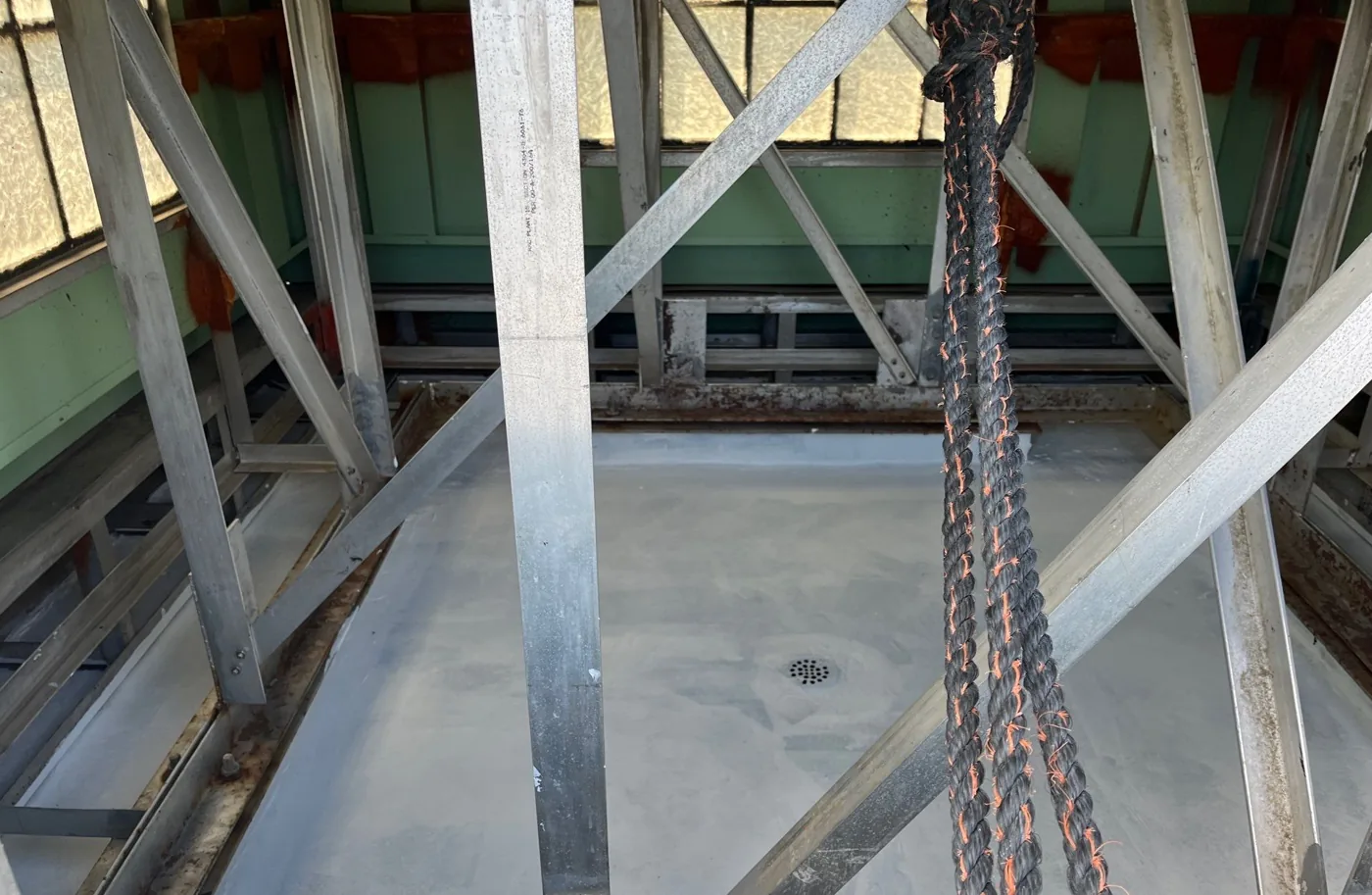
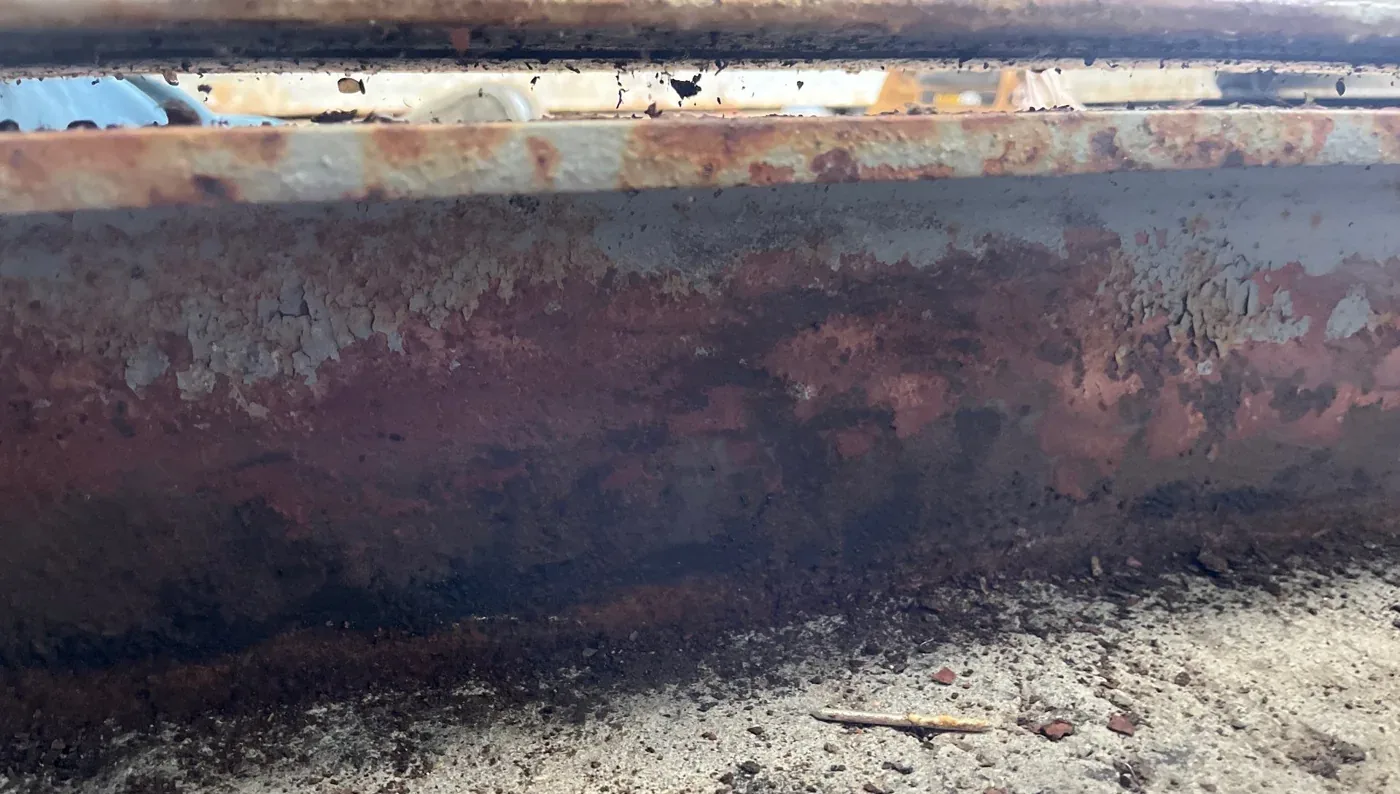
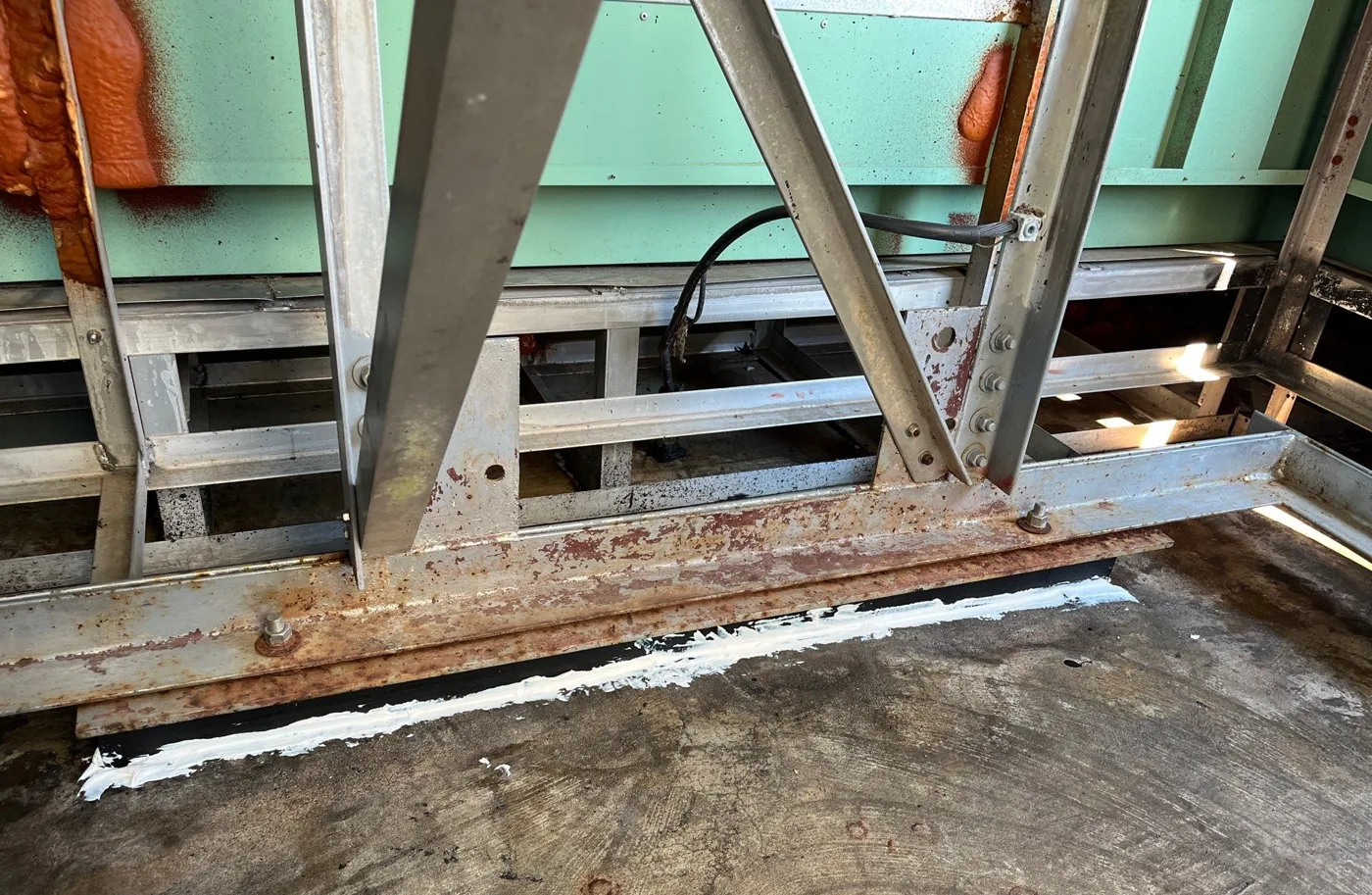
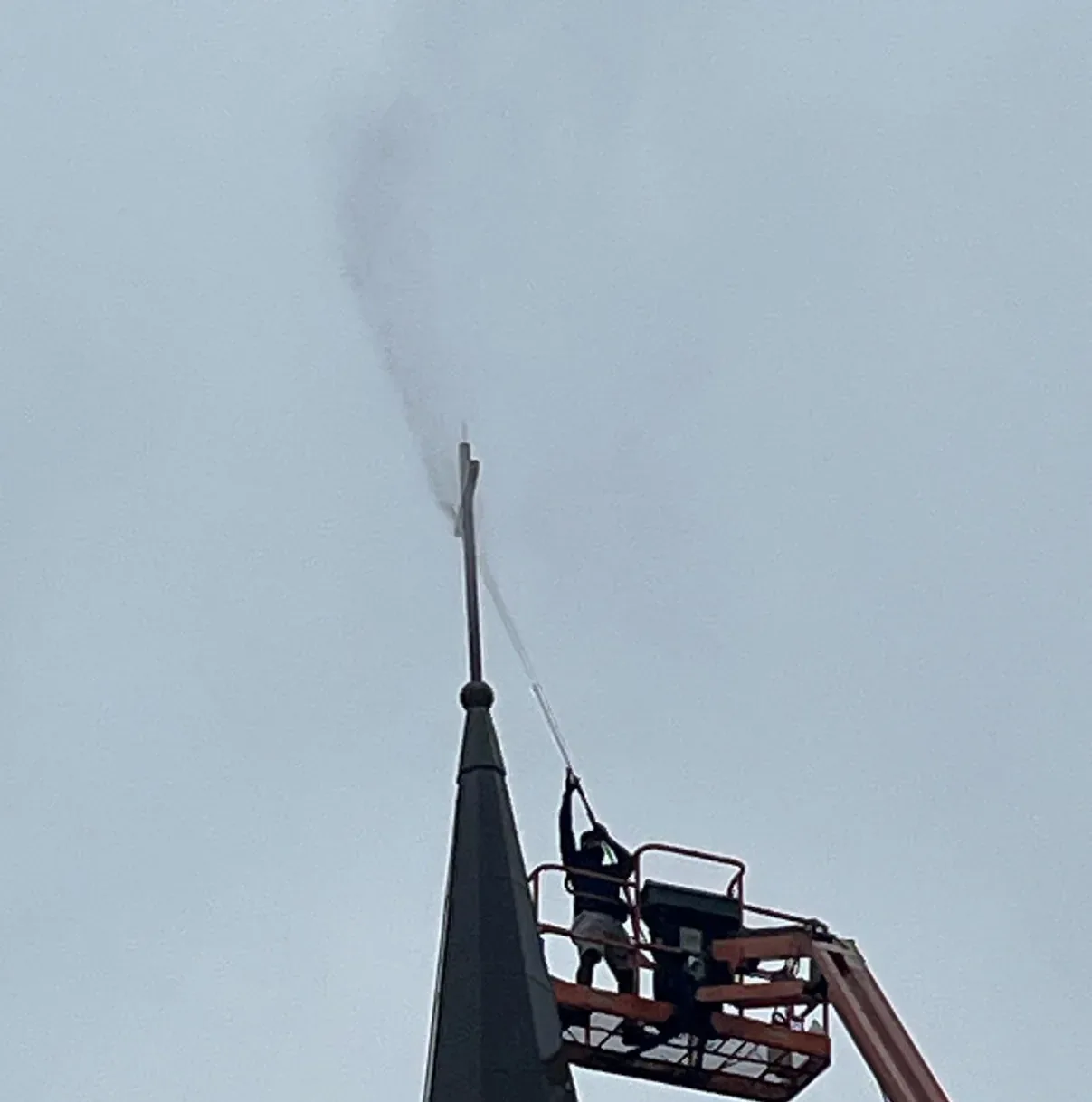
Most of the coating calls we take start the same way: a flat or metal roof somewhere past the middle of its life, a repair budget that keeps getting spent on the same seams, and a replacement quote that landed hard. Restoration exists for exactly that position — it converts a looming capital project into planned maintenance on a roof that still has structure worth keeping, and it resets the surface the weather attacks without shutting down anything under it.
What you should expect from us is an assessment, not a pitch. We inspect and survey the roof for moisture, tell you plainly which sections qualify for coating and which do not, and where the honest answer is mixed — it often is — we scope it that way: replace the saturated section, restore the sound ones, phase the work around your operations and your budget year. The specification you receive names the chemistry, the product, the preparation, the detail work and the target film thickness, so the bids you gather against it are comparable line by line. Coating bids that name none of those things are how buildings end up with paint jobs.
We run this work from our office in Rocky Mount and cover commercial roofs across Eastern North Carolina. If you manage several buildings, we will walk the portfolio and rank the roofs by urgency — the point of a coating program is getting to each roof while it still qualifies, because restoration has a window and a roof only leaves that window in one direction. The full commercial side of our work, replacement included, is on our commercial roofing page.
Coatings have a real place on homes in this region — a narrower place than the internet suggests, but a real one. The best residential candidates are metal roofs: the 5V and corrugated tin on farmhouses and outbuildings across our counties, and older standing seam that has gone chalky and started seeping at the fasteners. If the panels are sound, rust treatment and a coating system can put a roof like that back into service for a long time, keeping the character of the original metal instead of replacing it. When the panels are not sound — rusted through at the laps, fastener holes wallowed out — coating is throwing money at the problem, and the honest conversation becomes new metal; that work lives on our metal roof installation page.
The other genuine residential candidates are low-slope sections: the roofs on manufactured and mobile homes, and the nearly-flat roofs over porches, carports and additions that were never great candidates for shingles in the first place. These small roofs cause an outsized share of household leaks, and a properly detailed coating system is often exactly the right fix for them.
What we will not do is coat an asphalt shingle roof and call it restoration — the reasoning is in the “wrong call” section above, and it does not change because the roof is on a house. If your shingle roof is aging, a roof inspection and a straight answer cost you nothing, and our roof repair and roof replacement pages cover what comes next.
Roof coating is easy to sell and easy to do badly, and the difference does not show for a year or two. Whoever you hire — us or another roof coating company — these are the questions that separate quality roof coating services from a paint job:
Our specifications answer every one of those questions in writing, so you can put any other bid next to ours line by line.
It depends on the size of the roof, the substrate, the chemistry, the film thickness specified, how much rust treatment and seam detailing the roof needs, and access. Preparation and detailing are where two bids for the "same" job usually differ, which is why a price means little until you know what it includes. We quote after inspecting the roof, and our specification lists the product, the preparation, the detail work and the target thickness so the number can be compared honestly against any other bid.
On the right roof, yes: a structurally sound metal or low-slope roof with a weathered surface can be restored for a fraction of the disruption of a tear-off, and the coated surface can be renewed again later instead of replaced. On the wrong roof — saturated insulation, a failing deck, an asphalt shingle roof — it is money spent hiding a problem. Whether it is worth it for your roof is exactly what the inspection answers.
They work when the roof underneath is sound and the work is done in the right order. Leaks are stopped by the detail work — sealed seams and fasteners, reinforced laps, flashed penetrations — done before the field coat; the coating then protects that work and the rest of the surface from the sun and the weather. A coating sprayed over an unprepared, leaking roof usually does not stop the leak for long, because the water is getting in at a detail the coating simply bridged.
The best coating for a metal roof is a complete system rather than a single product: rust treated and primed, fasteners individually sealed, laps taped or reinforced with fabric, then a base coat and a reflective elastomeric top coat. On sound metal, a rubberized or acrylic system is the proven, cost-effective choice and recoats easily. We specify by roof, not by habit.
It depends on the product, the temperature and the humidity, and each manufacturer publishes a rain-free time for its coatings on the data sheet. Water-based coatings need warm, dry conditions to cure and are the most sensitive to rain and dew; that is why we schedule coating days by the forecast, stop work in time for the coat to set before evening dew, and never gamble a fresh coat on an Eastern NC afternoon thunderstorm.
It depends on the chemistry, the substrate, and above all the film thickness applied — coating manufacturers publish expected service ranges for their systems on their data sheets, and the thicker builds carry the longer expectations and the longer warranties. The honest part most contractors leave out: a coating applied thin looks identical to a coating applied to spec for the first year or two, which is why we measure film thickness during application rather than asking you to take it on faith. Coatings are also renewable — when a properly installed system reaches the end of its service life, it is cleaned and recoated rather than torn off, which is a large part of the economic case.
Not directly, and be wary of anyone who says otherwise. Leaks mean water has been getting into the assembly, so the first questions are where it went and how much of the insulation is wet — that is what the moisture survey answers. Active leak points are repaired and detailed as part of surface preparation, wet materials are cut out and replaced, and then the coating goes over a roof that is already watertight. A coating is the reason the roof stays fixed; the detail work underneath it is the reason it got fixed.
Less than it sounds like it means. Elastomeric describes a property — the cured film stretches and recovers as the roof moves with temperature — not a chemistry. Silicones, acrylics and urethanes are all elastomeric coatings. So a bid that says "elastomeric coating" has told you how the product behaves but not what it is, and the differences that matter come down to which chemistry it is. Ask the bidder to name the product and the chemistry. If they cannot, that tells you something too.
Silicone is a moisture-cure coating; the trade-offs are that it holds dirt, it is slippery when wet, and future recoats must also be silicone. Acrylic is water-based, economical, easy to maintain, handles sun well and recoats easily, which makes it a proven choice on metal roofs especially. Matching the chemistry to your specific roof and its substrate is most of what you are hiring a coating contractor to know.
Yes — metal restoration is a large share of our coating work, on everything from warehouses and shops to farmhouses and outbuildings. A sound metal roof with surface rust, weathered finish and seeping fasteners is an excellent coating candidate, and the work is mostly in the preparation: mechanical rust prep, rust-inhibitive primer, individually sealed fastener heads and detailed lap seams before the field coats. If panels are rusted through or the fastener holes have wallowed out, we will tell you the roof is past coating and talk about replacement instead.
Far less than replacement, which is a real part of why building owners choose it. There is no tear-off, so there are no dumpsters, no rain of debris, no days when the building is open to the sky, and in most cases no reason for the business under the roof to change anything about its day. Odors are the main consideration — we plan around air intakes and schedule the strong-smelling stages with you. Loading docks, entrances and parking stay usable, and we sequence the roof in sections so no area is committed during weather it cannot handle.
Generally, and for a structural reason rather than a promotional one: a restoration keeps everything about the existing roof that still works — the deck, the insulation, the membrane or panels as a substrate — and spends money only on the surface that wore out. You skip the tear-off labor, the disposal, and the disruption, which is where much of a replacement budget actually goes. But the comparison is only honest when the roof is genuinely a coating candidate. On a roof with saturated insulation or a failing deck, a cheap coating is the most expensive option there is, because you pay for it and then you pay for the replacement anyway. The inspection settles which side of that line your roof is on.
The inspection settles it: whether your roof is a coating candidate, which system fits it, and what the work would consist of — or an honest explanation of why coating is not the answer for your roof and what is. Workmanship that lasts, priced fairly, from a local crew that will still be here when the roof needs looking at again. Prefer to write it out first? Reach us through the contact page and tell us about the roof.
Related reading on this site: commercial roofing, metal roof installation and our Rocky Mount home base.