Metal Roof Installation in Eastern NC
Standing seam and screw-down metal roofs installed — and aging metal restored — by a crew based right here in Rocky Mount, working across Eastern North Carolina
Metal Roofing From a Rocky Mount Contractor, Not a Traveling Crew
Our office is at 136 S. Business Ct in Rocky Mount — this is our home market, not a territory we drive into after a storm. When you put a metal roof on a house here, you want the company that installed it to still be here when the roof needs a fastener checked or a boot resealed ten years on. That is the whole premise of how we work: workmanship that lasts, priced fairly, from people you can find at the same address next year.
Metal makes particular sense in this part of the state. Eastern North Carolina gives a roof three hard problems — hurricane-season wind, long stretches of heat and humidity, and the algae and moisture that shorten the life of asphalt shingles. A properly installed metal roof answers all three, and it does it without the streaking and granule loss that have Rocky Mount homeowners looking at tired shingles fifteen years in.
What metal does not deserve is the sales treatment it often gets. There are two fundamentally different metal roofing systems sold in this market, and the honest comparison between them is the first thing we walk every customer through.
Standing Seam vs. Screw-Down: The Honest Comparison
A screw-down roof (the trade calls it exposed-fastener) is what most people picture from barns and older houses down east: ribbed panels fastened straight through the face of the metal with gasketed screws. It is the affordable way into a metal roof, and for the right building it is a genuinely good product. The honest part that often goes unsaid: every one of those screws seals against the panel with a rubber washer, and rubber ages. Sun and heat cycling harden the gaskets, panels expand and contract against fixed screws, and over the years fasteners work loose or their washers give up. A screw-down roof is not maintenance-free — it is a roof with a scheduled check-up, and anyone who sells it without saying so is setting you up for a leak you were never warned about.
A standing seam roof solves that problem structurally. The panels lock together at raised seams, and they are held down by concealed clips fastened to the deck — no screw ever penetrates the weathering surface of the roof. The clips also let each panel slide as it expands and contracts through our summer-to-winter temperature swings, which is exactly the movement that loosens exposed fasteners. You pay more for standing seam because there is more metal in the seams, more skilled labor in the details, and a fastening system you will never have to think about.
| Consideration | Screw-Down (Exposed Fastener) | Standing Seam (Concealed Fastener) |
|---|---|---|
| How it fastens | Gasketed screws through the panel face | Hidden clips under the panel; no face penetrations |
| Thermal movement | Panels work against fixed screws as they expand and contract | Clips allow panels to float with temperature swings |
| Maintenance reality | Fastener gaskets age; plan on periodic checks and eventual re-tightening or replacement | Minimal — no exposed gaskets to age out |
| Up-front cost | Lower — the economical way into metal | Higher — more metal, more labor in the details |
| Best fit | Barns, workshops, outbuildings, budget-driven projects | The home you plan to keep; buildings where the roof should be a one-time decision |
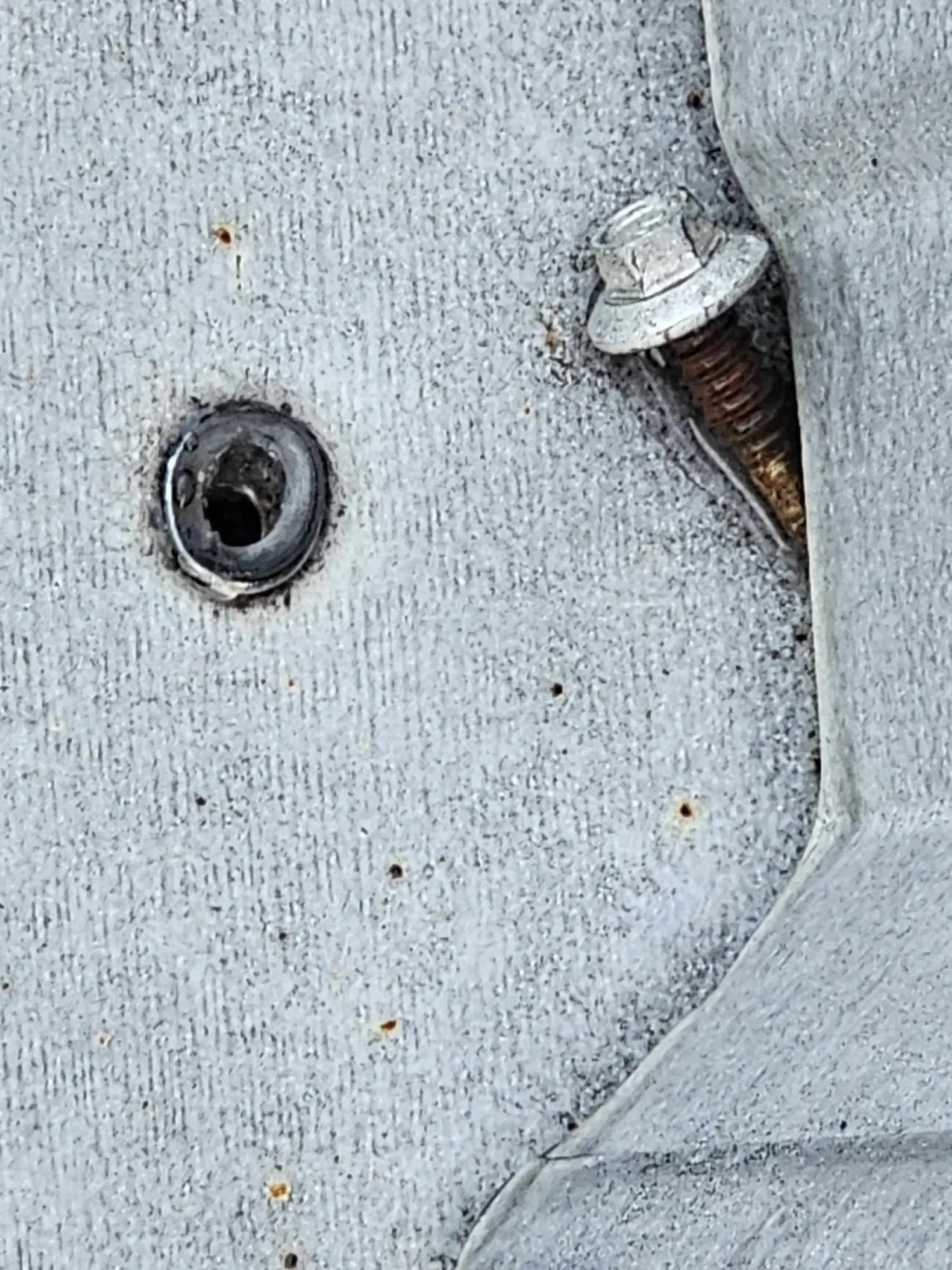
We install both, and we will tell you straight which one your building and your plans actually call for. Plenty of Nash County pole barns should be screw-down. Very few forever homes should.
Panel Profiles, Gauge and Finish — What the Choices Mean
Profiles
Standing seam comes in mechanical-lock profiles, where the seams are crimped closed with a seaming tool, and snap-lock profiles, where panels engage by hand. Mechanical lock is the choice for low slopes and the most exposed sites; snap-lock installs faster on ordinary residential pitches.
On the exposed-fastener side, the common choices are ribbed utility panels, classic corrugated, and 5V crimp — the profile you see on older farmhouses and coastal cottages across the eastern counties, and still the right look for many of them.
Gauge and paint
Gauge measures panel thickness, and the numbering runs backwards: lower is thicker. Residential standing seam is typically 24 or 26 gauge; 29 gauge is the lighter material common on agricultural buildings. Thicker panels resist denting, oil-canning (visible waviness in flat panel faces) and foot traffic better, which is why we quote gauge explicitly on every estimate rather than leaving it in fine print.
Finish matters as much as thickness. PVDF paint systems hold their color and resist chalking noticeably better over the years than the economy polyester finishes — a difference you see at year fifteen, not at installation.
What Goes Under the Metal Matters in a Hot, Humid Climate
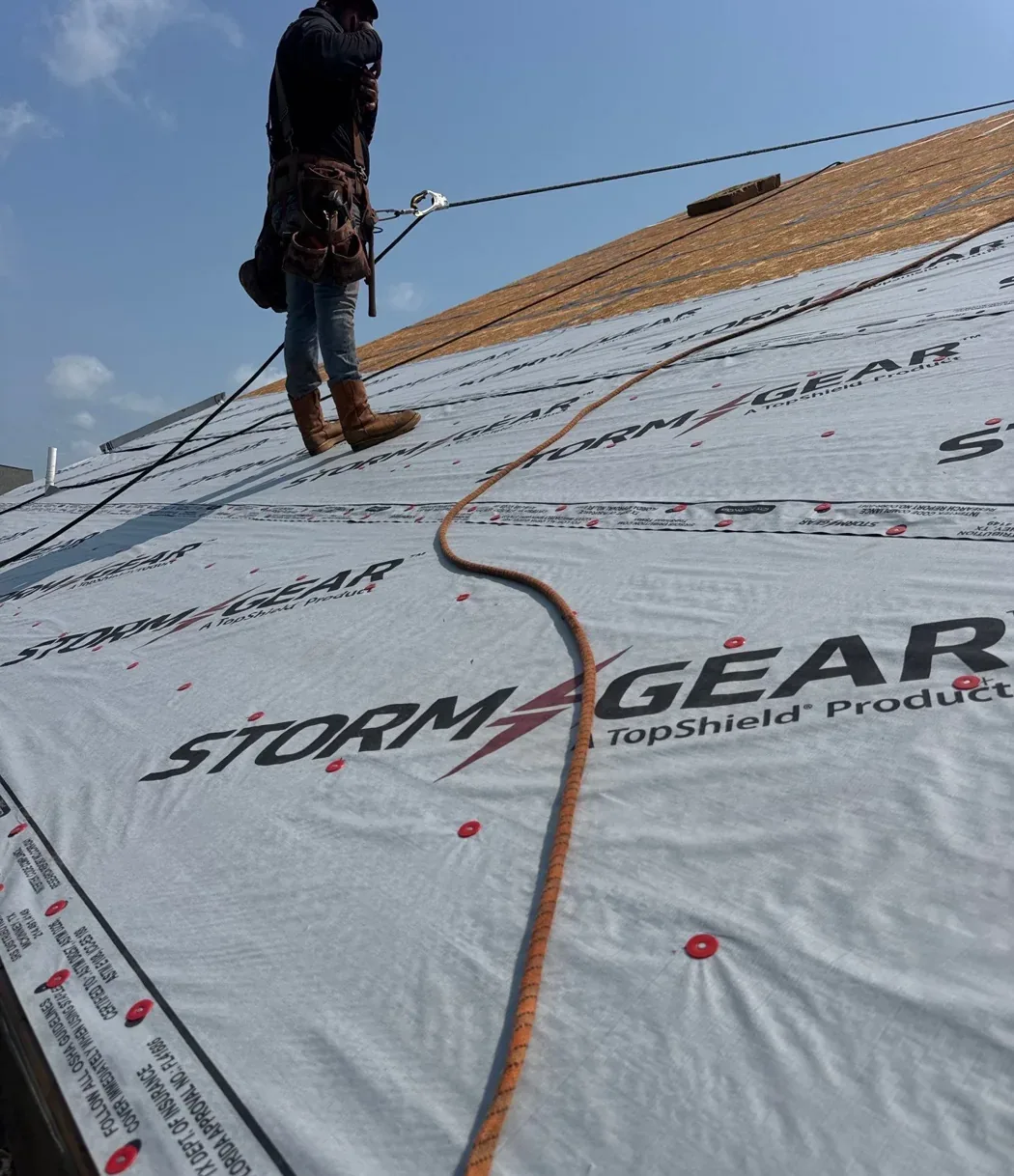
A metal roof surface gets hot in an Eastern NC summer — hot enough to cook ordinary asphalt felt paper underneath it until it dries out and cracks. That is why we install high-temperature-rated synthetic underlayment under metal, with high-temp self-adhering membrane at valleys, eaves and penetrations. The underlayment is the roof's second line of defense; there is no sense putting a decades-long covering over a paper product that will not survive underneath it.
Humidity is the other half of the problem. Warm, moist air that reaches the cool underside of metal panels condenses, and a roof assembly has to manage that moisture rather than trap it. Depending on the building, that means the right underlayment, ventilation that actually moves air through the attic, or a vented batten space under the panels. It is unglamorous detail work, and it is precisely the detail work that separates a metal roof that stays dry from one that quietly rots its deck.
Metal Over Existing Shingles: When It Works, When to Tear Off
One of metal's practical advantages is that it can sometimes be installed over an existing shingle roof, saving the cost and disruption of a tear-off. The conditions have to be right: a single existing layer, a deck that is solid and flat, and an installation method — battens or purlins that create a clean plane and an air space, or an approved underlayment directly over the shingles — that suits the building and the code.
Just as often, tear-off is the right answer, and we say so. If the deck feels soft anywhere underfoot, if there are already two layers of shingles up there, or if the roof has a history of leaks whose damage we cannot see from above, new metal over the top only hides the problem where no one can reach it. A tear-off lets us inspect and repair the deck, seal it properly, and give the metal the foundation it deserves. The over-roof conversation is one we have on the roof with you, with the facts in front of both of us — not a one-size answer from a sales script.
Down-East and Coastal Jobs: Salt Air Changes the Spec
Material selection
Close to salt water, plain galvanized steel corrodes faster than it should. Near the sounds and the coast we steer jobs toward aluminum panels or steel with the more corrosion-resistant metallic coatings, matched to the manufacturer's guidance for distance from salt water — because a warranty that excludes your address is not a warranty.
Fastening and trim
Salt air finds every cheap screw. Coastal work gets stainless or long-life coated fasteners, compatible metals throughout the trim package (mixing the wrong metals invites galvanic corrosion), and edge details closed up tight, since wind exposure on open coastal lots is a different animal than a sheltered Rocky Mount street.
Simple upkeep
A coastal metal roof appreciates an occasional fresh-water rinse in the zones rain does not wash — under eaves and overhangs where salt sits on the finish. It is the cheapest maintenance in roofing, and we show every coastal customer where it matters on their own roof.
Why Metal Suits Eastern NC Hurricane Country
Hurricane wind attacks a roof by finding edges to lift. An asphalt roof offers it thousands of them — every shingle tab is a small flap held by a few nails and a sealant strip. A metal roof offers far fewer: panels interlock into a continuous surface and are fastened along their length, so the wind has to defeat a connected system rather than peel individual pieces. That is the structural reason metal roofs so often come through coastal storms with their field intact.
The rest of the answer lives in the details underneath: how the deck is sealed and fastened, how the eaves and rakes are locked down, and whether the vents can keep wind-driven rain out. We build those details the same way on metal as we do on our FORTIFIED roofing work, and if storm performance is the reason you are shopping for a roof, our hurricane-resistant roofing page walks through the whole system — not just the covering.
Already Have Metal? Restoration Often Beats Replacement
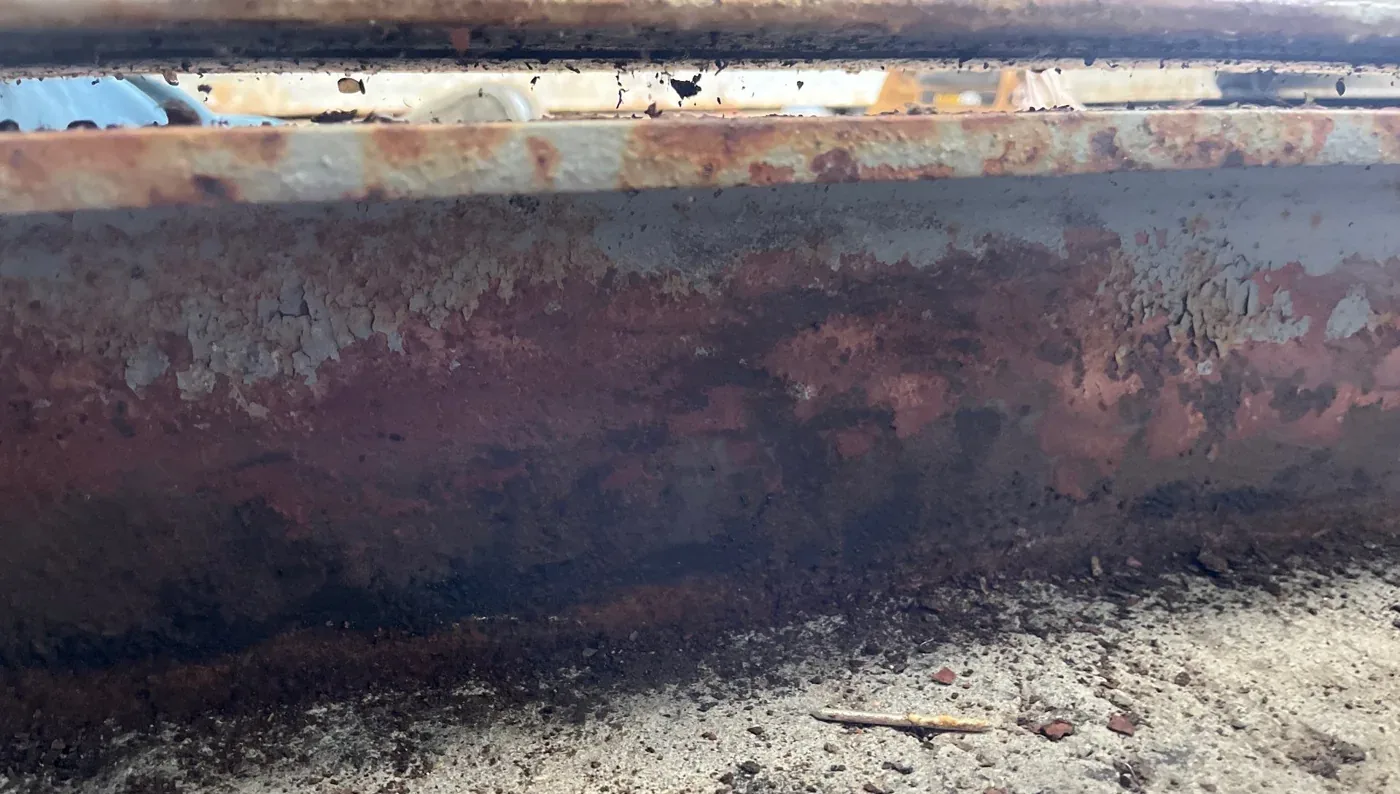
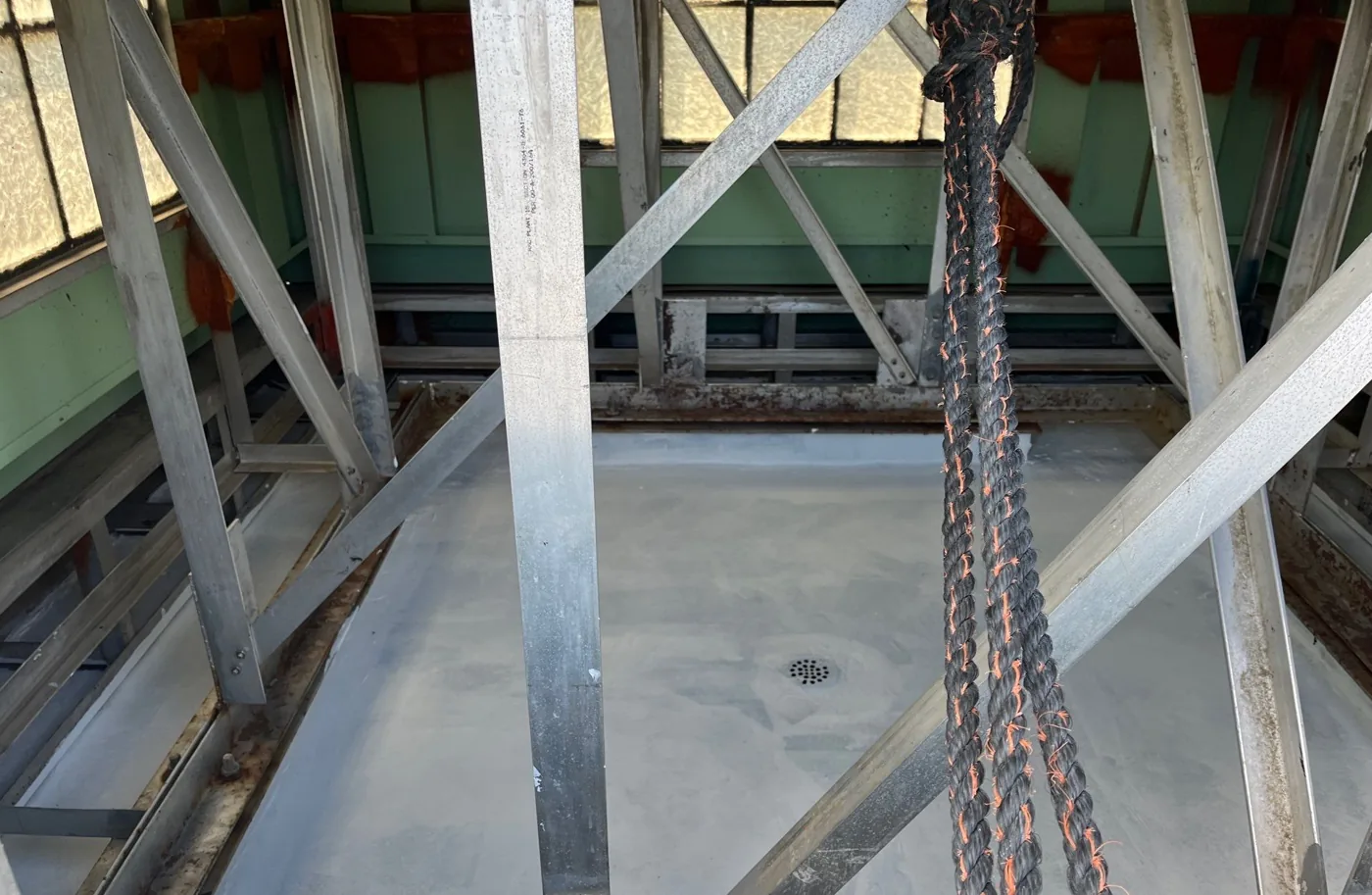
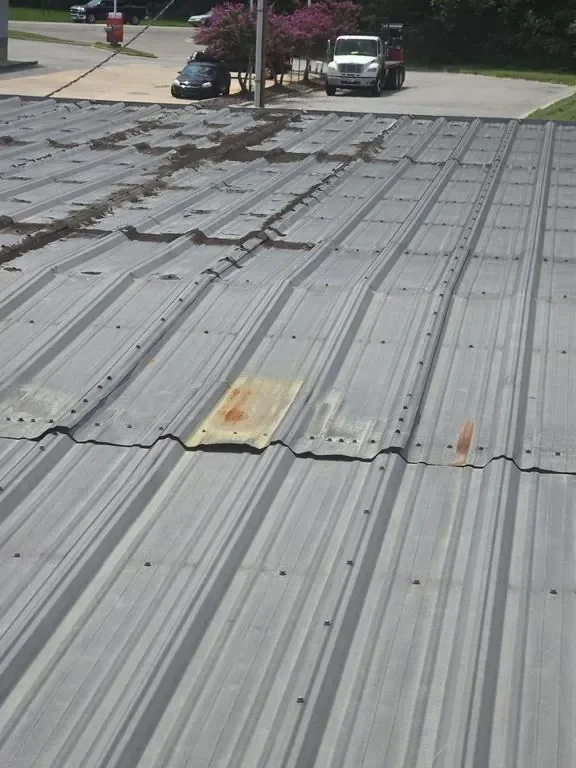
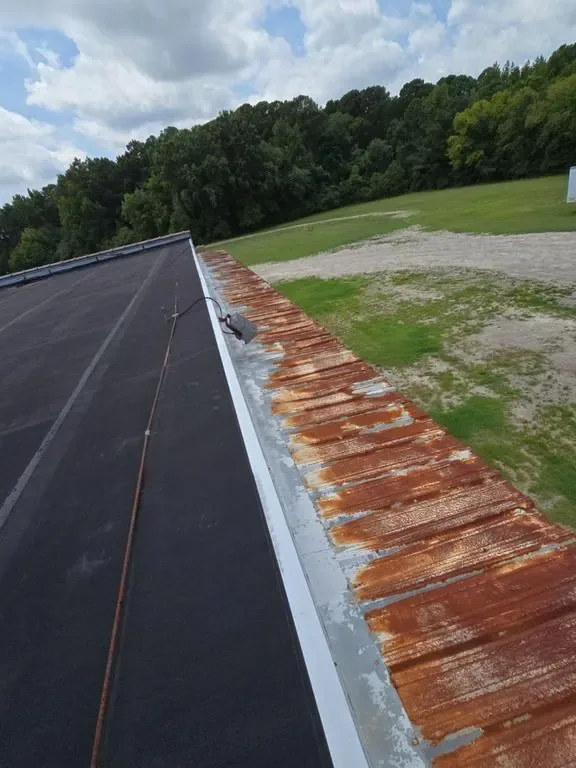
A lot of Eastern NC buildings — farmhouses, shops, church structures, commercial roofs — are wearing metal that is decades old. Age shows up in predictable places: rust at fastener heads and lap seams, chalked and faded paint, dried-out sealants. If the panels are still structurally sound, the roof usually does not need replacing. It needs restoring: rust treated and primed, seams and fasteners sealed, and the whole surface finished with an elastomeric coating system that returns it to service as a watertight, reflective roof. It is a fraction of the cost of new metal, and it is work we do year-round — the full process is on our roof coating page.
Where We Install Metal Roofs
Metal roofing jobs run out of our Rocky Mount office across Nash, Edgecombe, Wilson and Pitt counties and the rest of Eastern North Carolina — farmhouses and pole barns out in the county, brick ranches in town, shops and churches, and coastal-side homes down east. Recent metal jobs in our home market are on the metal roofing in Rocky Mount page. Local pages: Rocky Mount, Nashville, Tarboro, Wilson, Greenville and Goldsboro.
Weighing metal against shingles on price? Our roofing costs FAQ has cited North Carolina numbers for both. Planning panels? See solar-ready roofing. Replacing a shingle roof instead? See roof replacement. Everything else we do is on our roofing services page.
Metal Roofing: Frequently Asked Questions
How much does a metal roof cost in Rocky Mount, NC?
More up front than architectural shingles — there is no honest way around that. Where the price lands depends on the system: a screw-down panel roof on a simple gable costs a good deal less than a standing seam roof on a cut-up house with valleys, dormers and chimneys. Panel profile, gauge, trim and flashing work, and whether the old roof comes off or stays under it all move the number. For a statewide benchmark, This Old House's North Carolina cost guide (RSMeans data, updated June 2026) puts metal at about $8.57 per square foot installed against $4.40 for asphalt shingles, and the range we publish for metal roofs on a typical Eastern NC home is $15,000 to $25,000. We put every one of those choices in a written, line-item estimate before any work is scheduled, so you are comparing real options rather than a single take-it-or-leave-it figure.
Which is better — standing seam or screw-down metal?
Better for what, and for how long? Screw-down (exposed-fastener) metal is the affordable workhorse: it goes on fast and it sheds water well, but every screw passes through the panel face on a rubber gasket, and those gaskets age in North Carolina sun. Plan on having the fasteners checked and eventually re-tightened or replaced over the life of the roof. Standing seam costs more because the panels lock together and the fasteners are concealed clips under the metal — nothing penetrating the surface, and room for the panels to expand and contract. For a barn, shop or budget-driven project, screw-down is a fine choice made with open eyes. For the house you intend to keep, standing seam is usually the roof we would put on our own home.
Can you install metal over my existing shingles?
Sometimes, and when the conditions are right it saves you the cost and mess of a tear-off. It generally takes a single existing layer of shingles, a roof deck that is sound and flat, and an installation over battens or an approved underlayment so the metal is not telegraphing the shingle texture. When the deck is soft anywhere, when there are already two layers up there, or when we cannot verify what is under the old roof, tear-off is the right call — covering rot with new metal just seals a problem where you can no longer see it. We tell you which situation you have after we walk the roof, not before.
Is a metal roof loud when it rains?
Not the way people remember from barns and farm sheds. That drumming sound comes from metal fastened over open framing with nothing underneath it. A residential metal roof installed over a solid deck with underlayment between the metal and the wood sounds much like any other roof in the rain. Attic insulation quiets it further. If anything, most homeowners tell us they had to stop and listen for it.
My metal roof is rusting — do I have to replace it?
Often, no. Aging metal usually fails in predictable places first: rust blooming at fastener heads and lap seams, chalking paint, and sealants that have dried out. If the panels themselves are still sound, a restoration coating system — rust converted and primed, seams and fasteners sealed, then a full elastomeric coat — can put serviceable years back on the roof for well under the cost of replacement. We do this work regularly, and we will tell you plainly when a roof is past the point where coating is worth your money. See our roof coating page for how the process works.
Do metal roofs really hold up better in hurricanes?
A well-installed metal roof has real structural advantages in wind: the panels interlock into a continuous surface rather than thousands of individual tabs, and they are fastened along their full length instead of at a few nail points. Wind that would peel shingles course by course has far fewer edges to grab. But the covering is only one layer of the answer — the roof deck, its fastening, the edge metal and the vents decide how a roof actually behaves in a storm. That whole-system approach is what our FORTIFIED roofing page covers in depth.
How long does a metal roof last?
A well-installed metal roof typically outlasts an asphalt shingle roof by a wide margin, and the panel metal itself is rarely what ends its life. What decides it is the finish (PVDF paint systems hold up far better than economy polyester), the gauge, the fastening system and the maintenance: on a screw-down roof the fastener gaskets age long before the panels do, while a standing seam roof has no exposed fasteners to age. The manufacturer's paint and panel warranties for the specific product are the best published guide, and we give you those in writing with the estimate.
Is a metal roof better than shingles?
For a home you plan to keep a long time in Eastern North Carolina, metal has real advantages: wind performance, a long service life, no granule loss or algae streaking, and a reflective finish that sheds summer heat. Shingles cost much less up front, are easy to repair, and are the right answer for many houses and budgets. The honest comparison is cost over the years you will own the house — and which metal system you would actually be buying, because screw-down and standing seam are very different roofs.
Can you put solar panels on a metal roof?
Yes. Standing seam is one of the best roofs for solar because clamps attach to the seams with no holes through the roof, and the roof can outlast the panels. Exposed-fastener metal can carry solar too, with mounts designed for through-fastened panels. Our solar-ready roofing page covers planning a roof for panels.
Can you walk on a metal roof?
Carefully, and only where the panels are supported. On exposed-fastener panels you step on the flat near the purlins or fastener lines, not in the middle of an unsupported span, and on standing seam you avoid stepping on the seams. Metal is slick when wet, dewy or dusty, so we work it with fall protection and soft-soled shoes. If you need something on the roof serviced — an antenna, a vent, a satellite dish — call us rather than climbing it.
Talk Metal With a Rocky Mount Roofer
Whether it's standing seam on the house, screw-down on the barn, or a coating that saves the metal you already own — we'll look at the roof, lay out the real options, and put the numbers in writing.