Complete ProjectEastern North Carolina
Brick Colonial Roof Replacement
A large red brick colonial on the water in Eastern North Carolina came in with an aged dark asphalt roof: weathered slopes still carrying blocks of mismatched patch shingles from earlier repairs, creased and lifted tabs that were chalk-marked during the roof walk, and a brown water stain spreading across a ceiling inside the house. The crew stripped the roof to bare sheathing, dried the whole thing in with synthetic underlayment, and laid new grey architectural shingles, keeping tarps over the shrubs and across the lawn the entire time. The finished roof runs in clean straight courses over the hips and dormers and out toward the bay.
Photo timestamps run from an October inspection, through interior documentation in November, to the replacement itself over two days in January.
10 photographsIn the order the work happened
01 / 10
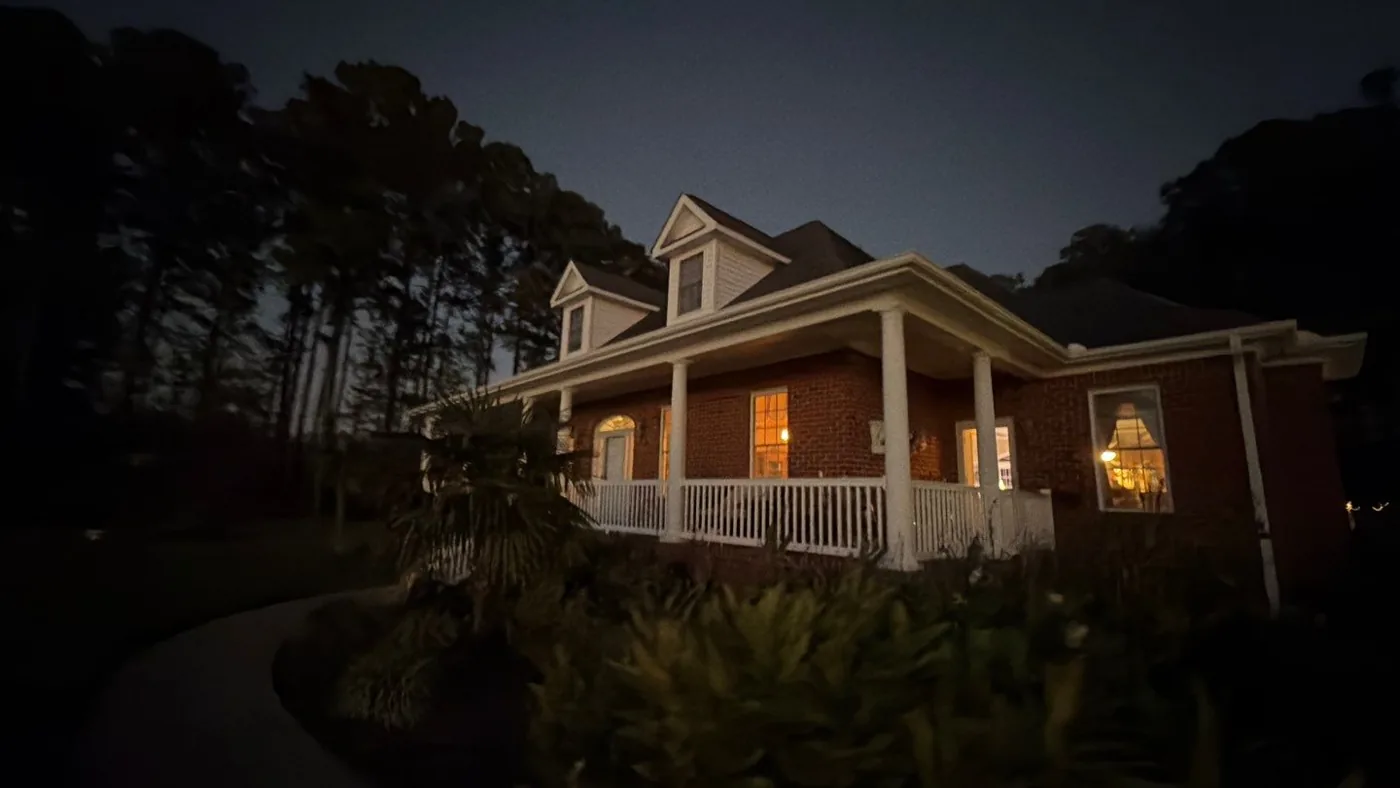
The brick colonial home in Eastern North Carolina at dusk, before the roof replacement began. 02 / 10
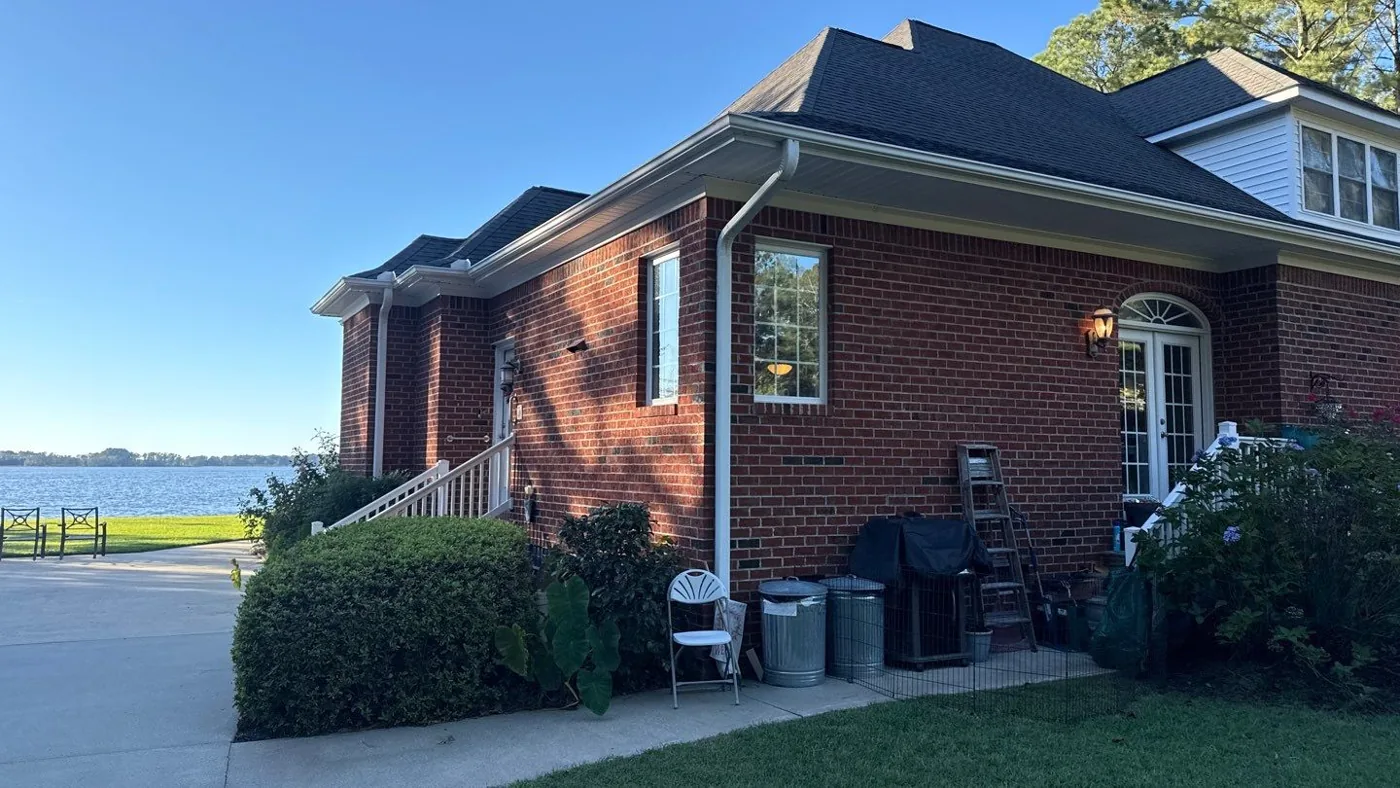
The original dark asphalt shingle roof as found, on the elevation facing the water. 03 / 10
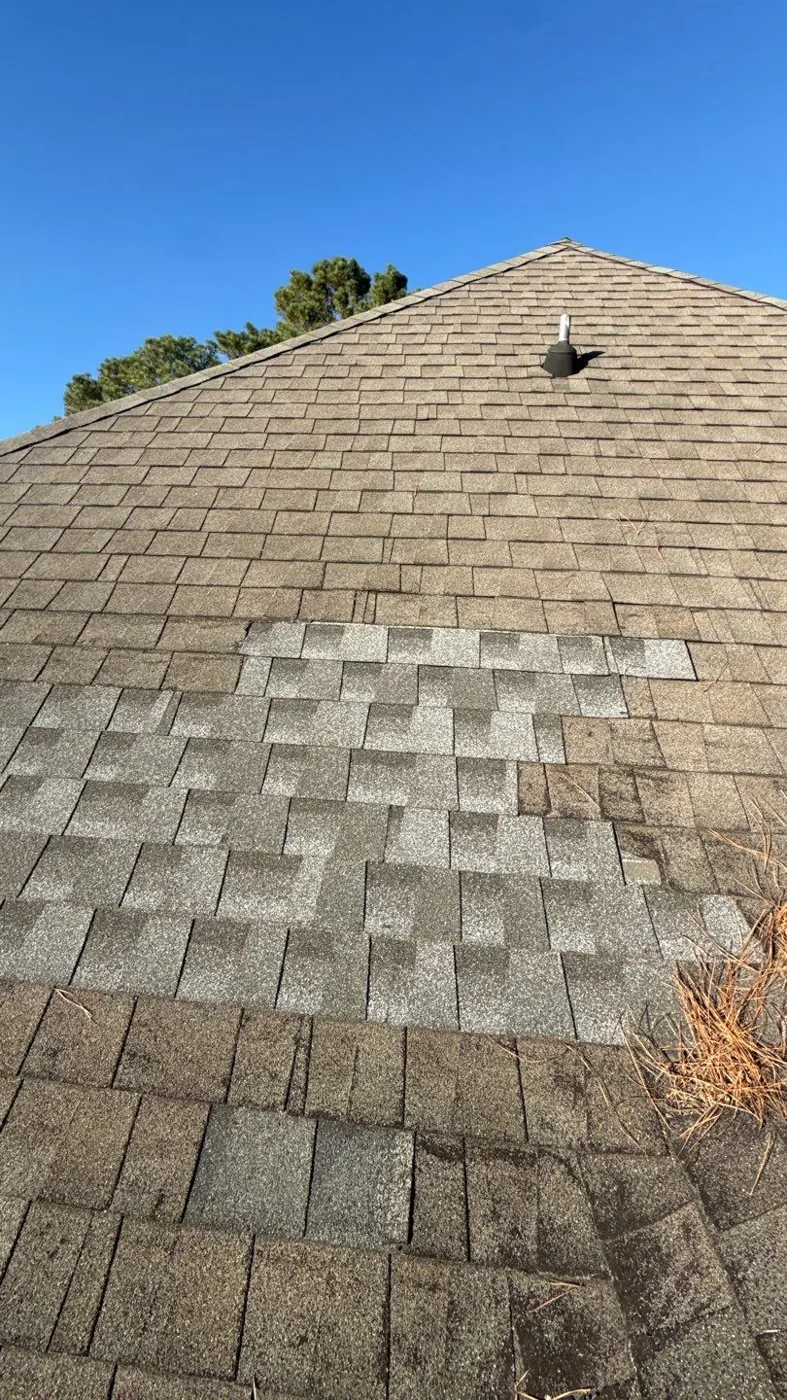
Weathering across the old slopes was uneven, with mismatched patch repairs left over from earlier fixes. 04 / 10
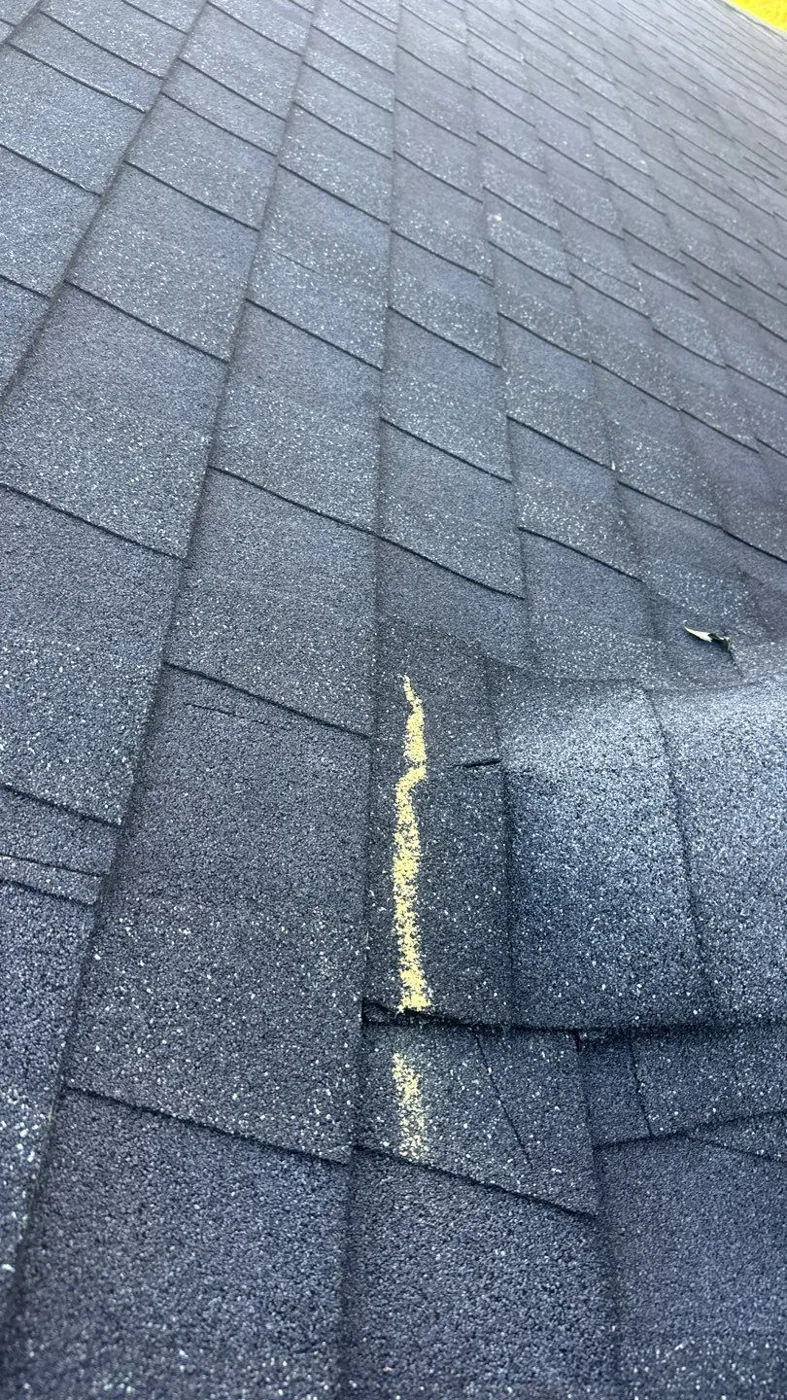
Creased and lifted shingles were circled in chalk as the roof was walked and documented. 05 / 10
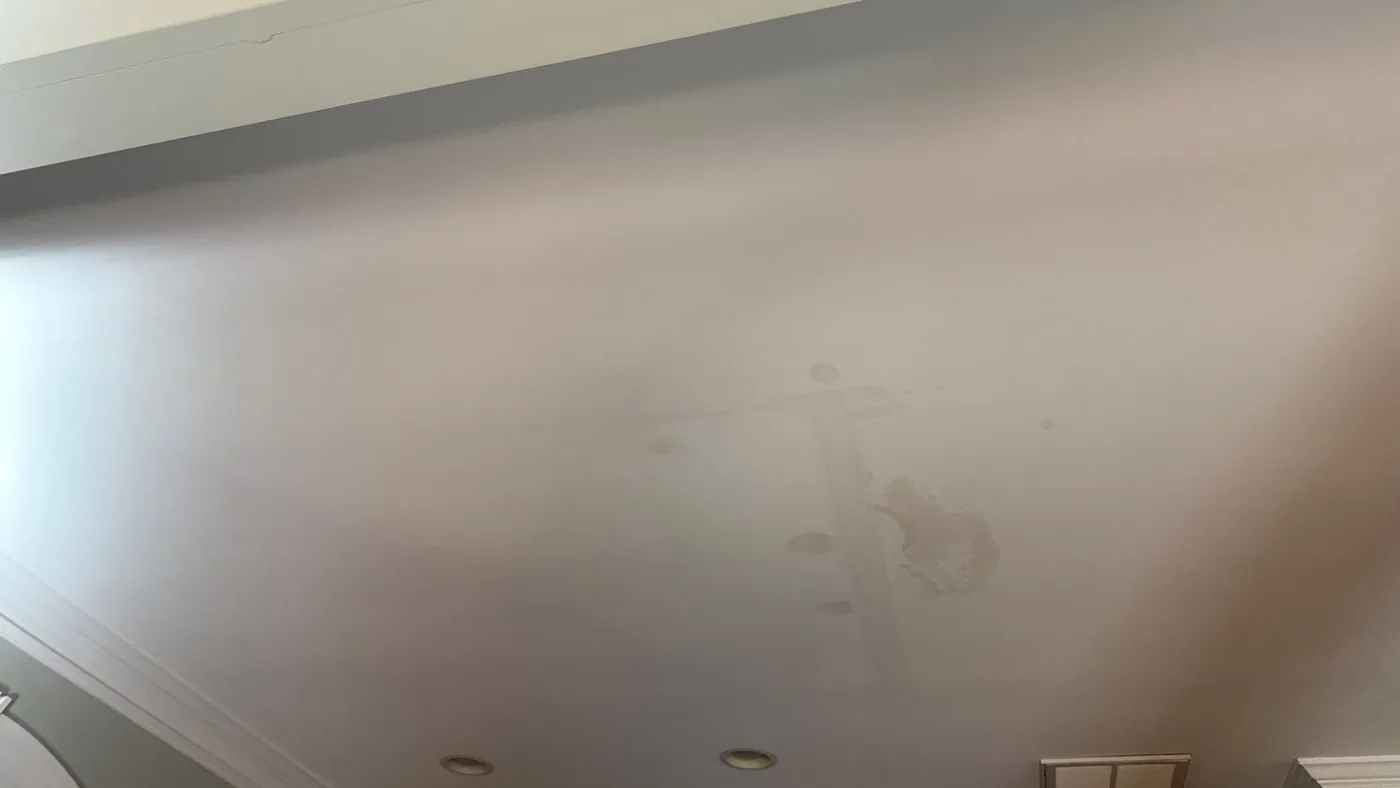
Inside the home, a brown water stain spreading across a ceiling showed the roof was letting water through. 06 / 10
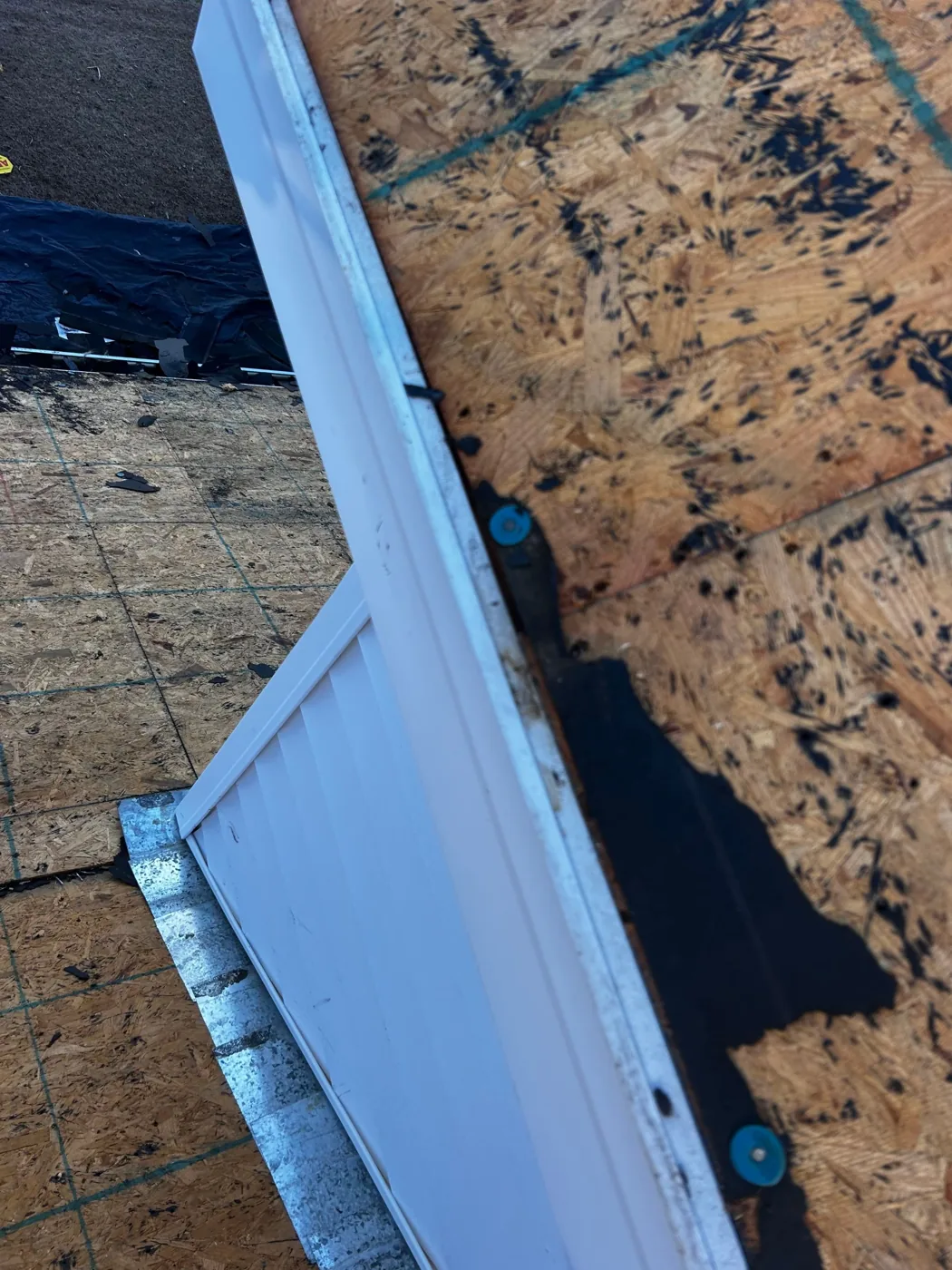
With the old shingles torn off, the bare roof deck was exposed and inspected before anything new went down. 07 / 10
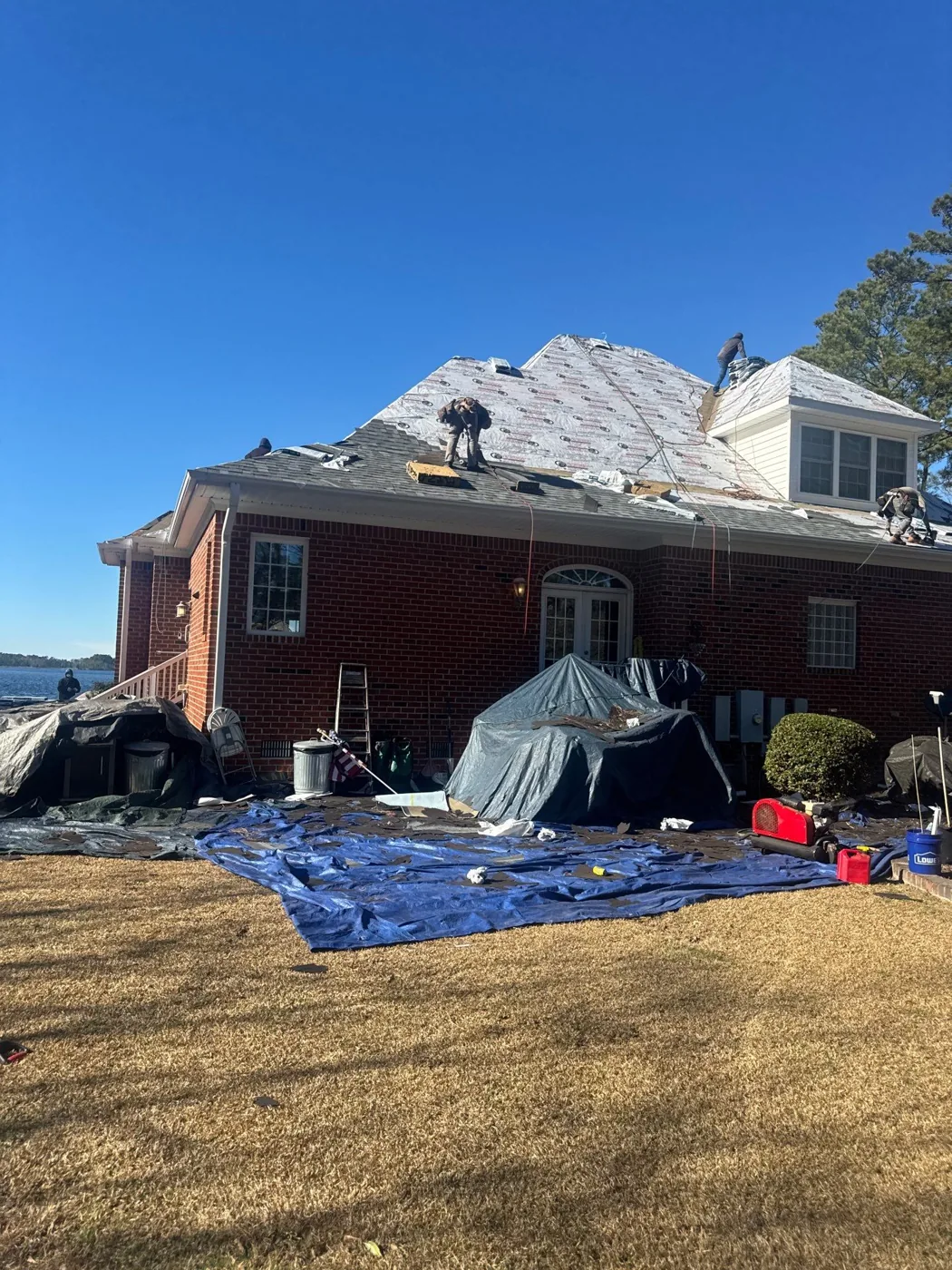
Shrubs were tarped and the lawn was covered so tear-off debris never touched the landscaping. 08 / 10
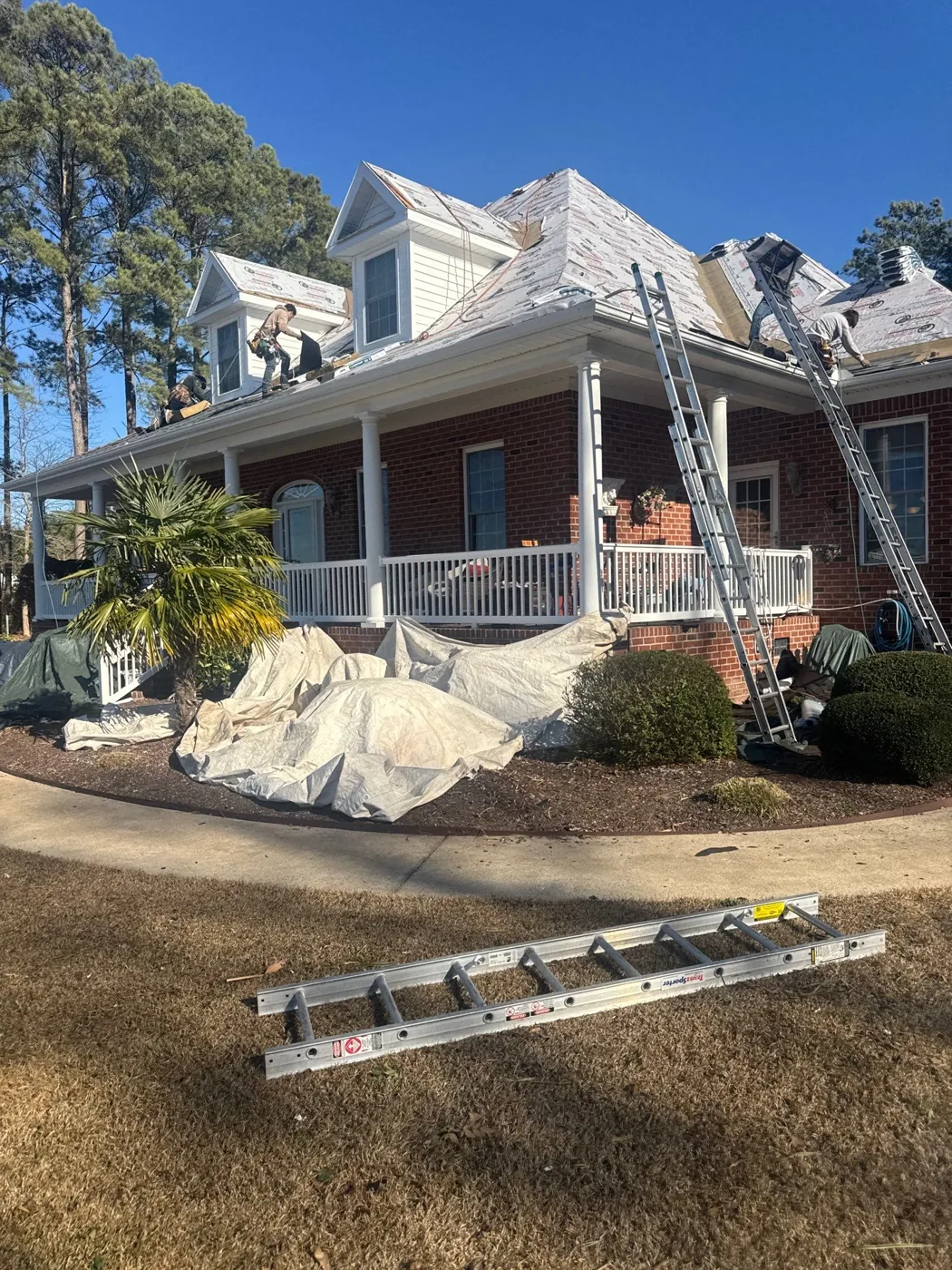
The whole roof was dried in with synthetic underlayment before the new shingles started going on. 09 / 10
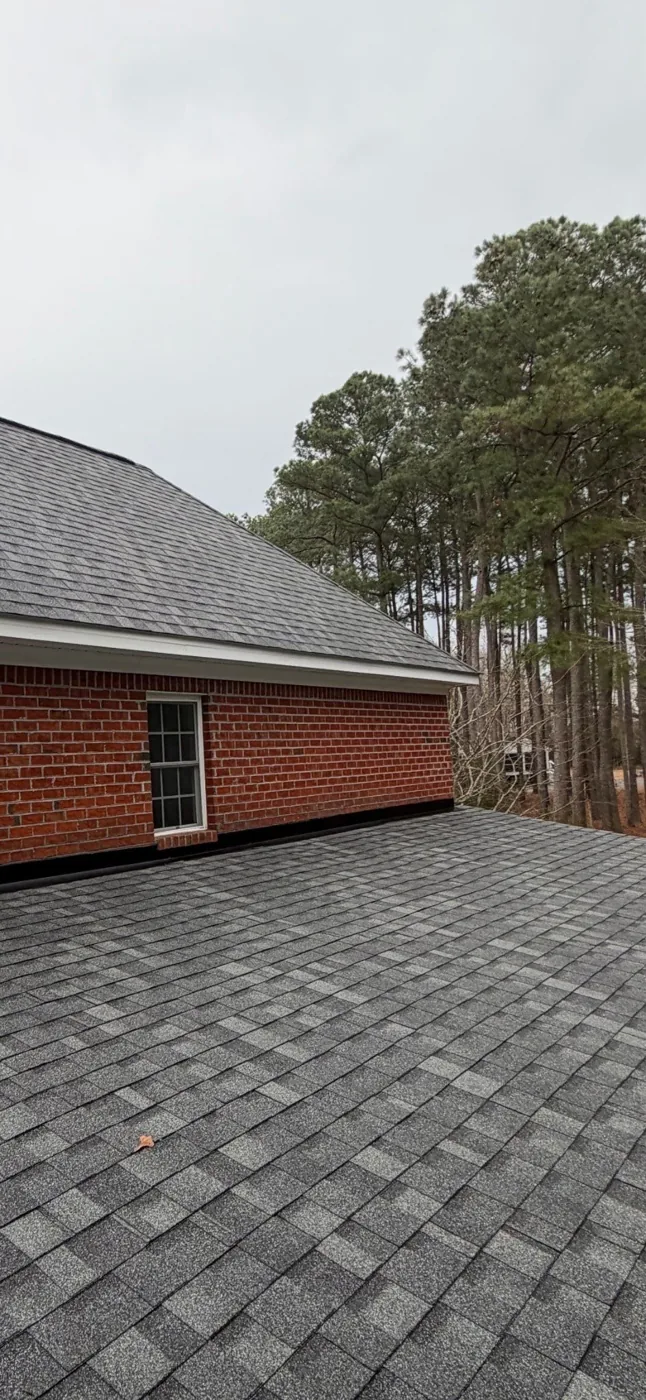
The finished grey architectural shingles run in clean courses over the hips and up to the brick wing. 10 / 10
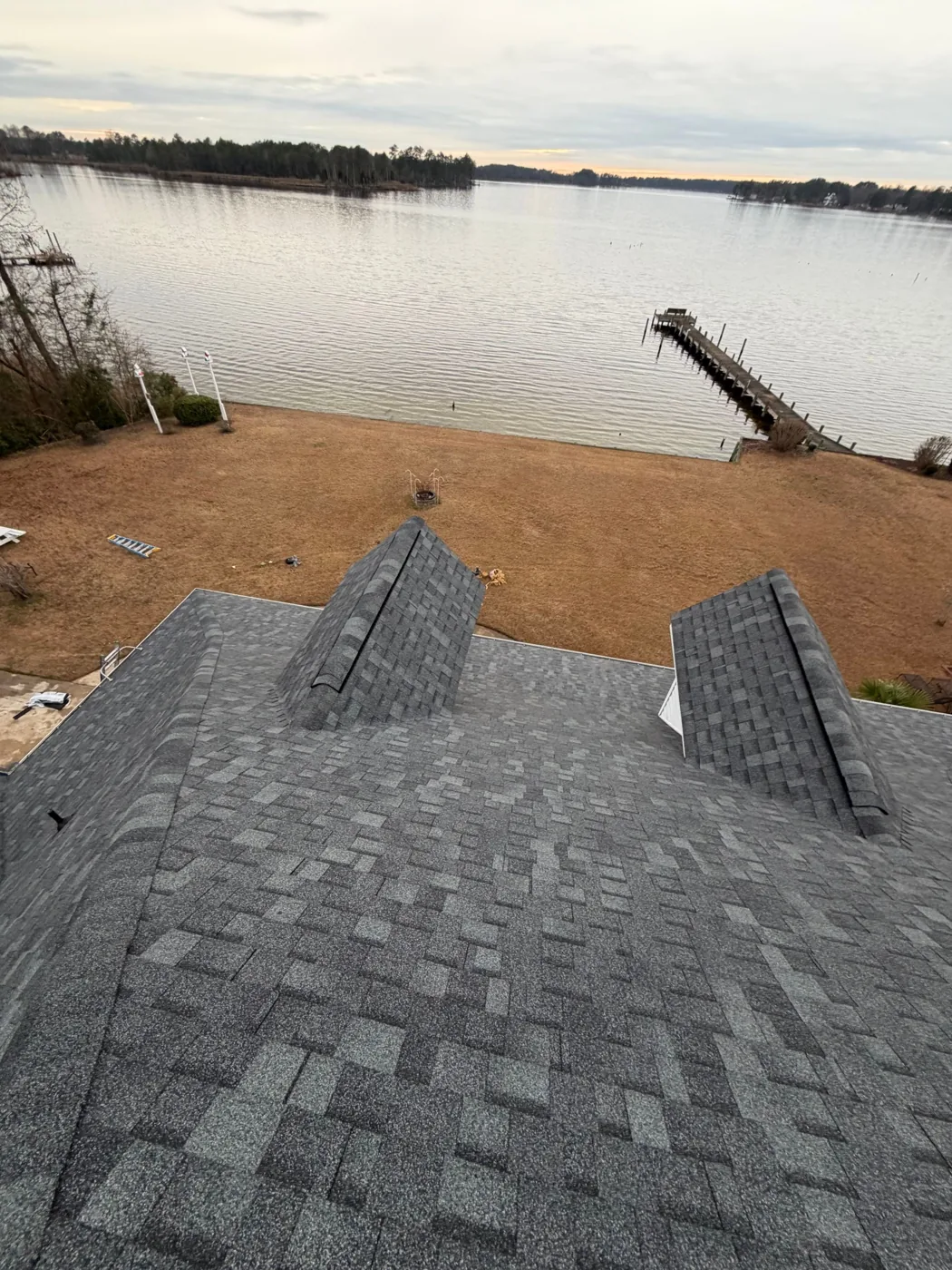
The completed roof, looking out over the bay and pier from the ridge at the end of the job.
Want your roof looked at?
Carolina Trophy Roofs works across Eastern North Carolina, and photographs the work as it goes so you can see what went on your roof before it was covered up. Book an inspection, or call and talk it through with us first.